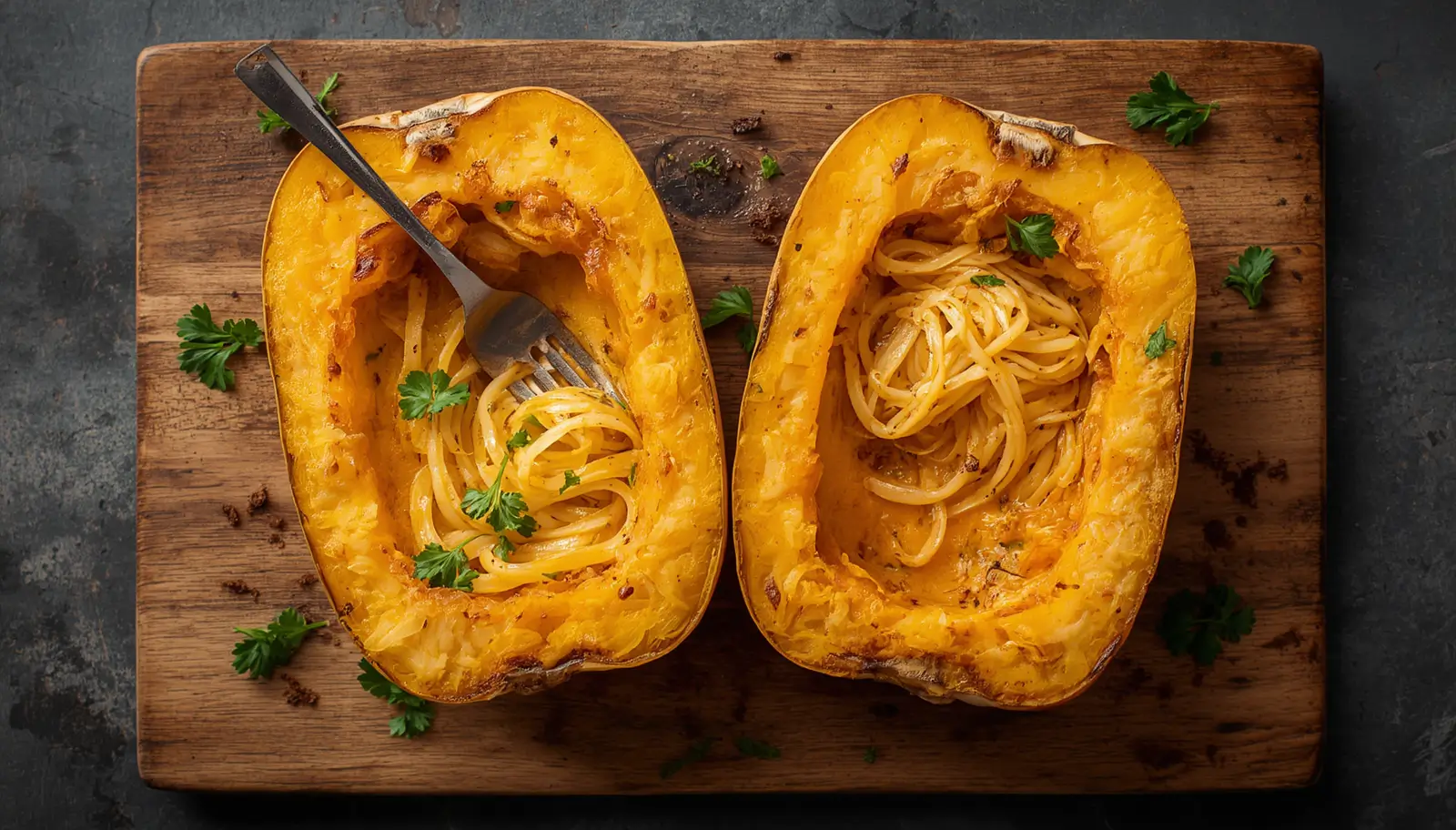
Baked Spaghetti Squash
As an Amazon Associate, I earn from qualifying purchases. This post may contain affiliate links, meaning I get a commission if you decide to purchase through my links, at no cost to you.
Table of Contents
Did You Know Most People Are Overcooking Their Baked Spaghetti Squash?
Here’s a surprising fact: a study published in the Journal of Food Science found that overcooking vegetables can reduce their nutrient content by up to 50%. And yet, overcooked baked spaghetti squash is one of the most common complaints among home cooks, turning what should be tender, golden strands into a watery, mushy mess.
If you’ve ever pulled a spaghetti squash out of the oven and wondered where it all went wrong, this guide is for you. Baked spaghetti squash is one of the most versatile, low-carb, naturally gluten-free vegetables you can cook, and once you know the right technique, you’ll never get it wrong again. Whether you’re asking how to cook spaghetti squash for the first time or you’ve tried it before and want better results, this post covers everything from prep to plating.
Ingredients
You only need a handful of pantry staples to make perfect baked spaghetti squash:
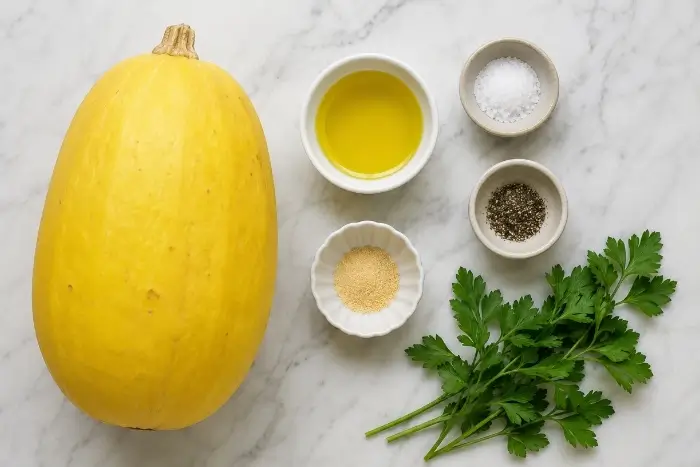
- 1 medium spaghetti squash (about 3–4 lbs), look for one that feels heavy and has a firm, unblemished skin
- 2 tablespoons olive oil or swap for avocado oil for a higher smoke point
- ½ teaspoon sea salt, kosher salt works too
- ¼ teaspoon black pepper, freshly cracked is best
- ¼ teaspoon garlic powder, optional, but adds a nice savory depth
- Fresh herbs for serving, parsley, basil, or thyme, all work beautifully
Substitutions: If you’re avoiding oil, a light spray of avocado oil cooking spray works well. For a richer flavor, brush the squash with a small amount of melted ghee or butter before roasting.
Timing
| Stage | Time |
|---|---|
| Prep Time | 10 minutes |
| Cook Time | 40–50 minutes |
| Total Time | ~60 minutes |
That’s about 90 minutes less than slow-cooker methods, and roughly 20% faster than many oven recipes that cook spaghetti squash whole. Halving the squash before roasting is the key time-saver; it exposes the flesh directly to the oven’s heat, speeding up the process and improving caramelization.
Step-by-Step Instructions
Step 1: Preheat Your Oven and Prep Your Pan
Preheat your oven to 400°F (200°C). Line a rimmed baking sheet (this is my favorite) with parchment paper or foil. This makes cleanup easy and prevents sticking to a small detail that makes a big difference.
Step 2: Cut the Spaghetti Squash in Half
Place the spaghetti squash on a stable cutting board. Using a large, sharp chef’s knife, carefully cut it lengthwise from stem to end. This is the trickiest part; the skin is tough. If it’s too hard to cut raw, microwave the whole squash for 3–4 minutes first to soften it slightly, then slice.
Step 3: Scoop Out the Seeds
Use a large spoon to scoop out the seeds and stringy pulp from the center of each half. Don’t throw those seeds away, rinse them, toss with olive oil and salt, and roast them separately for a crunchy snack.
Step 4: Season the Squash
Brush the cut sides of the spaghetti squash generously with olive oil, then sprinkle with salt, pepper, and garlic powder. Make sure to get into all the edges for even seasoning.
Step 5: Place Cut-Side Down and Roast
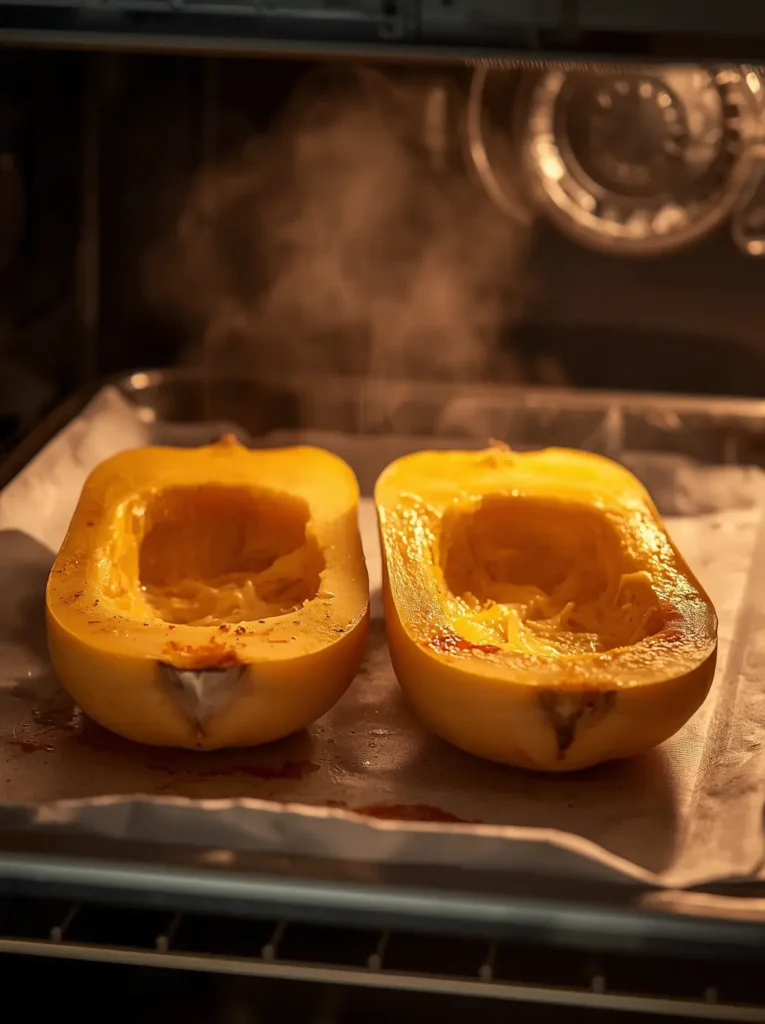
Arrange both halves cut-side down on your prepared baking sheet. This is the most important step for perfectly baked spaghetti squash. Placing it face down traps steam against the flesh, cooking it evenly while the exterior caramelizes slightly. Roast at 400°F for 40–50 minutes, depending on size.
Step 6: Test for Doneness
The squash is done when the skin is easily pierced with a fork, and the edges have turned lightly golden. Flip one half over the flesh should look opaque and slightly translucent, not wet or shiny.
Step 7: Shred Into Strands
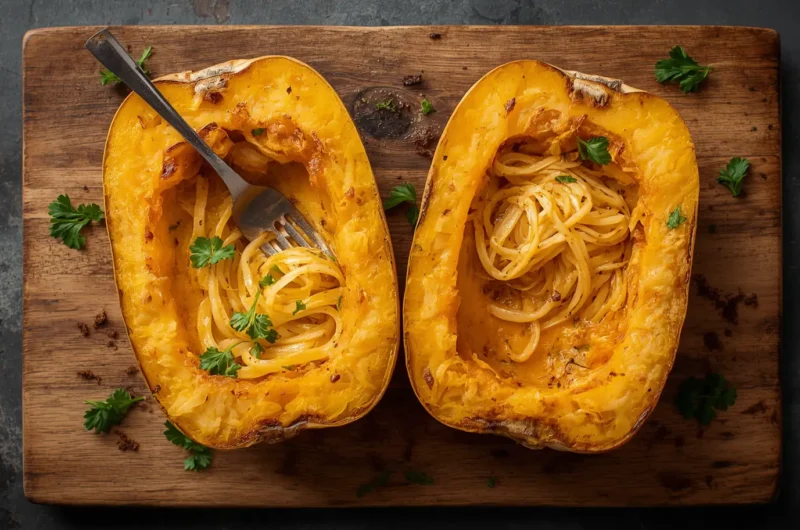
Let the cooked squash cool for 5–10 minutes (it will be very hot). Then use a fork to gently scrape the flesh from the skin in long strokes. Watch the magic happen as spaghetti-like strands separate perfectly. Season with a little extra salt and serve immediately, or store for later.
Nutritional Information
Spaghetti squash is an excellent choice for anyone watching their carb intake. Here’s the full nutritional breakdown per 1-cup serving of cooked spaghetti squash (plain, without oil or toppings):
| Nutrient | Amount per 1 Cup |
|---|---|
| Calories | 42 kcal |
| Total Carbohydrates | 10g |
| Net Carbs | 7.8g |
| Dietary Fiber | 2.2g |
| Protein | 1g |
| Total Fat | 0.4g |
| Vitamin C | 5mg (6% DV) |
| Vitamin B6 | 0.2mg (12% DV) |
| Manganese | 0.2mg (9% DV) |
| Potassium | 181mg (5% DV) |
Source: USDA FoodData Central
Is Spaghetti Squash Low Carb?
Yes, and this is one of the most searched questions about this vegetable for a reason. Is spaghetti squash low-carb? Absolutely. With only about 7.8 grams of net carbs per cup, it contains roughly 75–80% fewer carbs than traditional wheat pasta (which has around 38–40g net carbs per cup). According to Healthline, spaghetti squash is also rich in fiber, beta carotene, and vitamin C, making it a nutritional powerhouse well beyond just its low-carb profile. That makes baked spaghetti squash an outstanding pasta substitute for keto, low-carb, paleo, and diabetic-friendly diets.
If you’re looking for more low-carb pasta swaps, check out our guides to keto egg noodles and zucchini noodles, two other crowd-pleasing alternatives that pair beautifully with your favorite sauces.
Healthier Alternatives for This Recipe
Even a healthy recipe can be tweaked to suit different goals:
For strict keto: Skip the garlic powder if it has any added starch fillers and go straight for fresh minced garlic. Add a drizzle of extra-virgin olive oil after shredding.
For dairy-free: Top your finished spaghetti squash with avocado-based “cream” sauce instead of butter or cream-based sauces.
For extra protein: Toss the finished strands with a serving of ground turkey Bolognese, shredded chicken, or our keto meatballs for a complete, protein-packed meal.
For lower fat: Use a light mist of cooking spray instead of 2 tablespoons of olive oil, saving around 200 calories per squash half.
For added fiber: Mix in roasted zucchini, mushrooms, or spinach before serving to increase the fiber content and make it even more filling.
Serving Suggestions
Baked spaghetti squash is a blank canvas; here’s how to make it shine. And if you need more weeknight inspiration, browse our full collection of keto dinner recipes for ideas that pair perfectly with these strands.
Spaghetti squash is high in fiber and essential vitamins while being low in calories and carbs, making it one of the most nutritionist-approved vegetables you can build a meal around.
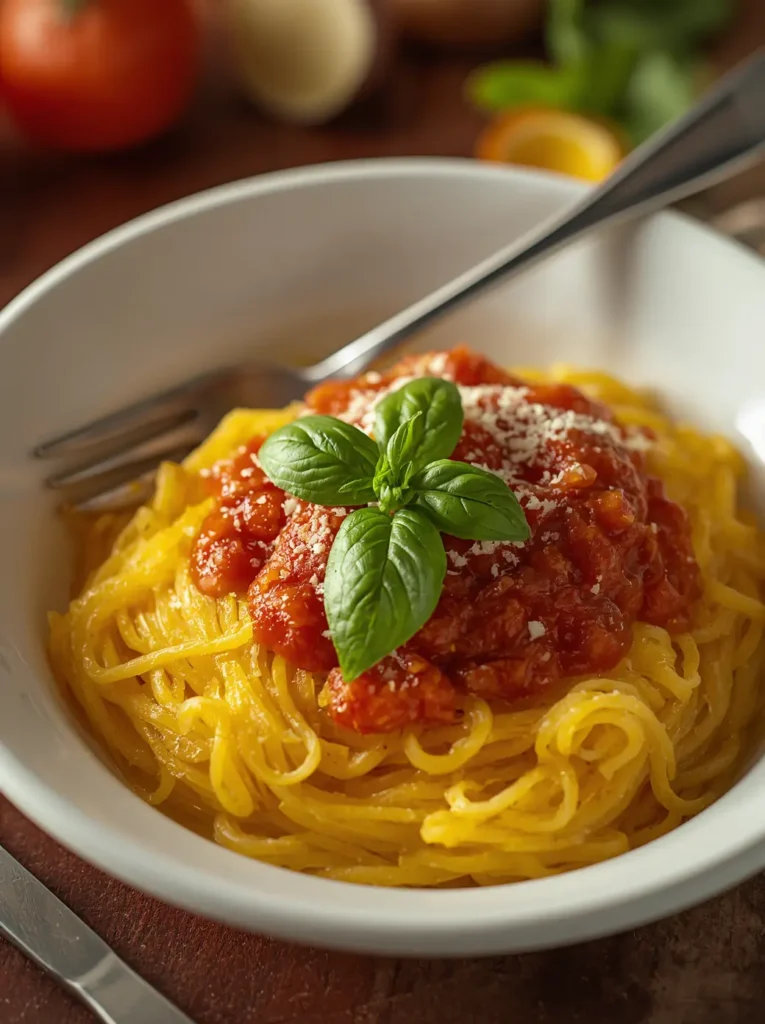
Classic marinara night: Top the strands with a rich, low-sugar tomato sauce and a sprinkle of nutritional yeast or Parmesan for a comforting, pasta-night feel.
Keto carbonara style: Toss with crispy bacon, eggs, and Pecorino Romano for an indulgent dish with very few carbs.
Simple garlic butter: Melt 2 tablespoons of butter, stir in minced garlic and fresh parsley, and toss directly with the warm strands. Minimal effort, maximum flavor.
Buddha bowl base: Use it in place of rice or quinoa in a grain-free Buddha bowl, topped with roasted chickpeas, tahini, and cucumber.
Meal prep bowl: Portion the spaghetti squash into containers alongside proteins and veggies; it holds up well for several days of lunches.
Common Mistakes to Avoid
Cooking it whole: Many recipes suggest roasting spaghetti squash whole, but this can take up to 90 minutes and results in uneven cooking. Always cut it in half first for consistent results.
Not scoring the skin: If you do cook it whole, score the outside with a knife first to prevent it from cracking or bursting in the oven.
Placing it cut-side up: This allows moisture to collect on the flesh surface, leading to a watery result. Always place spaghetti squash in the oven cut-side down for the best texture.
Pulling it out too early: Undercooked squash won’t shred the strands properly and will be stiff and clumped together. When in doubt, give it another 5–10 minutes.
Over-seasoning before roasting: Salt draws out moisture. A light seasoning before roasting is fine, but wait until after shredding to adjust the final seasoning.
Skipping the resting time: Cutting into it straight out of the oven can result in burns and make shredding harder. Let it rest for 5–10 minutes first.
Storing Tips
Refrigerator: Store shredded spaghetti squash in an airtight container for up to 5 days. Keep it separate from any sauce to prevent it from becoming soggy.
Freezer: Yes, you can freeze it! Spread the shredded strands on a parchment-lined baking sheet, freeze for 1–2 hours, then transfer to a zip-lock bag. It keeps well for up to 3 months. Thaw overnight in the fridge before reheating.
Reheating: Reheat in a skillet over medium heat with a drizzle of olive oil for 3–4 minutes. Avoid the microwave if possible; it adds steam and makes the texture watery.
Meal prep tip: Roast two squashes at once and portion them into weekly meal prep containers. It makes weeknight dinners incredibly fast.
Conclusion
Baked spaghetti squash is simple, healthy, and endlessly versatile. Cut it in half, roast it cut-side down at 400°F, and fork it into beautiful golden strands. It’s low carb, nutrient-rich, and works with almost any sauce or topping you love.
Ready to try it? Give this recipe a go this week and let us know how it turned out in the comments below. I’d love to hear your favorite way to serve it!
FAQs
How do I know when baked spaghetti squash is fully cooked?
The skin should give easily when pressed with a fork, and the cut edges will look slightly golden. Flip it over; the flesh should look opaque and separate easily into strands. If the strands are still clumped, return them to the oven for another 5–10 minutes.
Can I microwave spaghetti squash instead of baking it?
Yes, pierce the whole squash several times with a fork, then microwave on high for 10–12 minutes, turning halfway through. However, baking spaghetti squash in the oven delivers better texture and a slightly caramelized flavor that the microwave cannot replicate.
What does spaghetti squash taste like?
It has a very mild, slightly sweet, and neutral flavor, far more subtle than butternut or acorn squash. This makes it an ideal base for bold sauces since it takes on the flavor of whatever you pair it with.
Baked Spaghetti Squash
Course: DinnerCuisine: American4
servings10
minutes50
minutes1
hourA simple, foolproof method for cooking baked spaghetti squash perfectly every time; golden, tender strands in just 60 minutes. Low-carb and keto-friendly.
Ingredients
Directions
- Preheat Oven:
Preheat your oven to 400°F (200°C). Line a rimmed baking sheet with parchment paper or foil. - Cut the Squash:
Place the spaghetti squash on a cutting board and carefully cut it lengthwise from stem to end using a large, sharp knife. - Scoop Out Seeds:
Use a large spoon to scoop out the seeds and stringy pulp from the center of each half. - Season the Squash:
Brush the cut sides with olive oil and sprinkle with salt, pepper, and garlic powder. - Roast Cut-Side Down:
Place both halves cut-side down on the baking sheet. Roast at 400°F for 40–50 minutes until the skin is easily pierced with a fork. - Test for Doneness:
The squash is done when the skin yields to a fork and the edges look golden. The flesh should be opaque when flipped. - Shred Into Strands:
Let cool for 5–10 minutes, then scrape the flesh with a fork in long strokes to create spaghetti-like strands.
Nutrition Facts
1 servings per container
Serving Size1 cup (155g)
- Amount Per ServingCalories42
- % Daily Value *
- Total Fat
0.4g
1%
- Sodium 28mg 2%
- Total Carbohydrate
10g
4%
- Dietary Fiber 2.2g 8%
- Protein 1g 2%
* The % Daily Value tells you how much a nutrient in a serving of food contributes to a daily diet. 2,000 calories a day is used for general nutrition advice.