Cauliflower Pizza Crust
Table of Contents
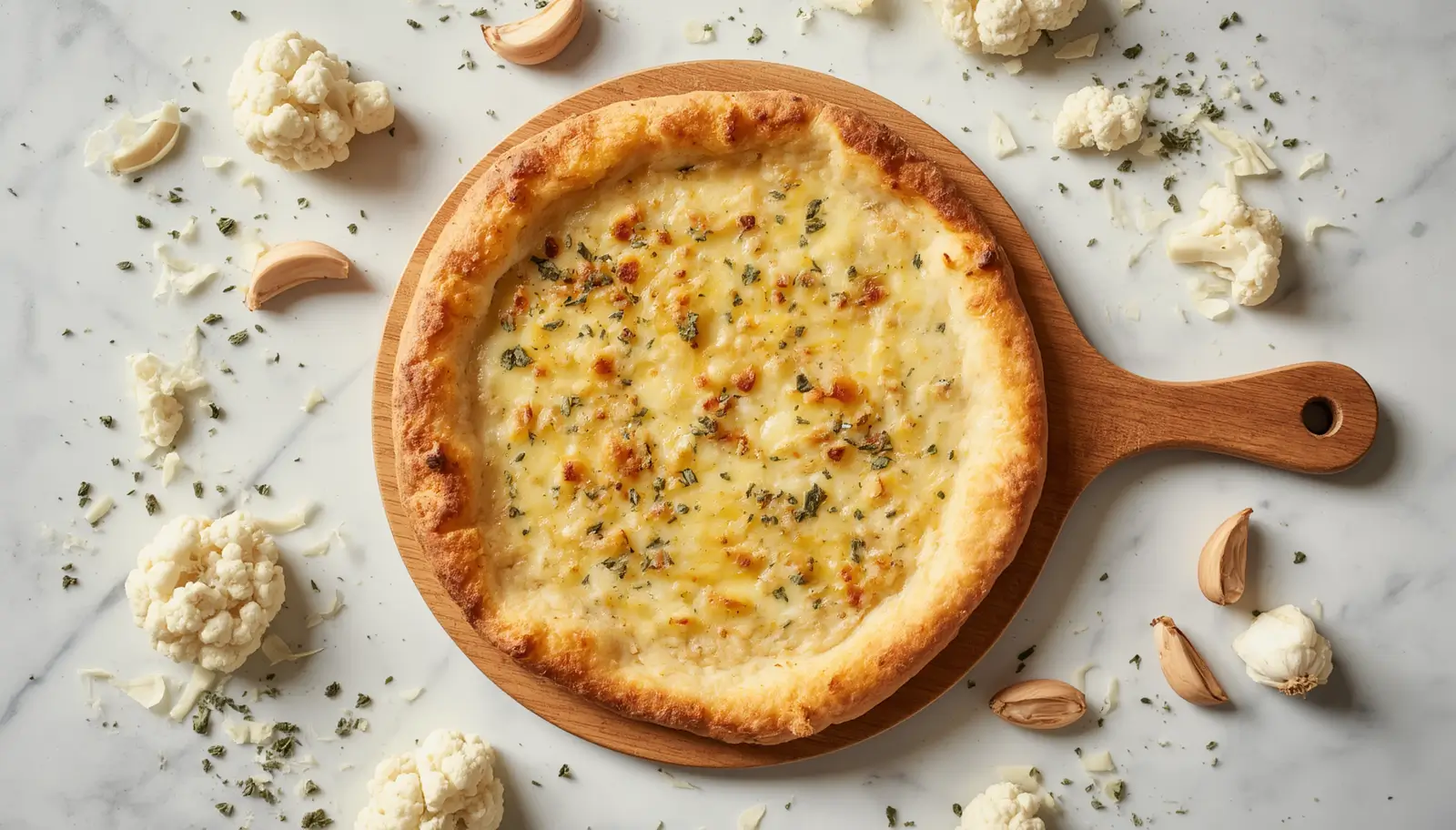
Did you know that a single slice of traditional pizza can pack over 300 calories and 35 grams of carbs? What if you could enjoy the same satisfying, cheesy pizza experience with a fraction of the carbs? That’s exactly what cauliflower pizza crust delivers. This clever, vegetable-based alternative has taken the low-carb world by storm, and once you try it, you’ll understand why millions of people have ditched the dough for good. Whether you’re keto, gluten-free, or just trying to eat a little cleaner, cauliflower pizza crust belongs in your weekly rotation.
Ingredients
Here’s everything you need to make a crispy, golden keto cauliflower pizza crust from scratch. Each ingredient plays a role, so try not to skip any!
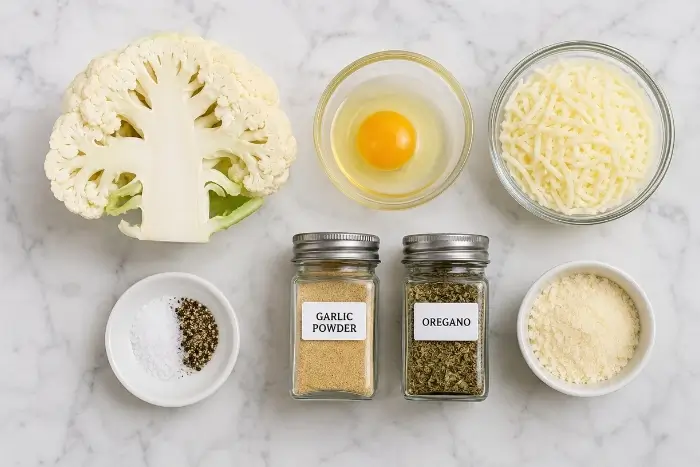
- 1 medium head of cauliflower (yields about 2–2½ cups riced) or use 2½ cups of store-bought cauliflower rice to save time
- 1 large egg acts as the binder; a flax egg works as a vegan substitute
- 1 cup shredded mozzarella cheese adds structure and that satisfying chew
- 2 tablespoons of grated Parmesan cheese for a subtle savory depth
- ½ teaspoon garlic powder
- ½ teaspoon dried oregano
- ¼ teaspoon salt
- ¼ teaspoon black pepper
Substitution ideas:
- Swap mozzarella for a dairy-free cheese blend if you’re avoiding dairy.
- Add 1 tablespoon of almond flour for extra crispiness.
- Use pre-riced frozen cauliflower (thawed and squeezed dry) to cut prep time in half.
Cauliflower is more than just a pizza base; it’s a genuine nutritional powerhouse. According to Healthline, cauliflower is high in fiber, antioxidants, and several important vitamins and minerals, making it one of the smartest vegetable swaps you can make in your diet.
Timing
- Prep time: 20 minutes
- Cook time: 30–35 minutes
- Total time: 50–55 minutes
That’s roughly 30% less time than the average homemade pizza dough recipe, which typically needs at least 90 minutes, including rise time. No yeast, no waiting, just mix, press, and bake.
Step-by-Step Instructions
Step 1: Rice the Cauliflower
Cut your cauliflower into florets and pulse them in a food processor until you get a fine, rice-like texture. Don’t over-process; you want small, even granules, not mush. If you’re using frozen riced cauliflower, simply thaw it completely before moving on.
Step 2: Cook and Cool the Cauliflower Rice
Transfer the riced cauliflower to a microwave-safe bowl and microwave on high for 4–5 minutes, or steam it on the stovetop until soft. Spread it out on a baking sheet and let it cool for 10 minutes. This step is non-negotiable; working with hot cauliflower will cook your egg prematurely.
Step 3: Squeeze Out Every Drop of Moisture
This is the most important step for a crispy cauliflower crust pizza. Transfer the cooled cauliflower to the center of a clean kitchen towel or cheesecloth and twist it tightly, squeezing out as much liquid as possible. You’ll be shocked by how much water comes out. Skipping or rushing this step is the #1 reason cauliflower crusts turn out soggy.
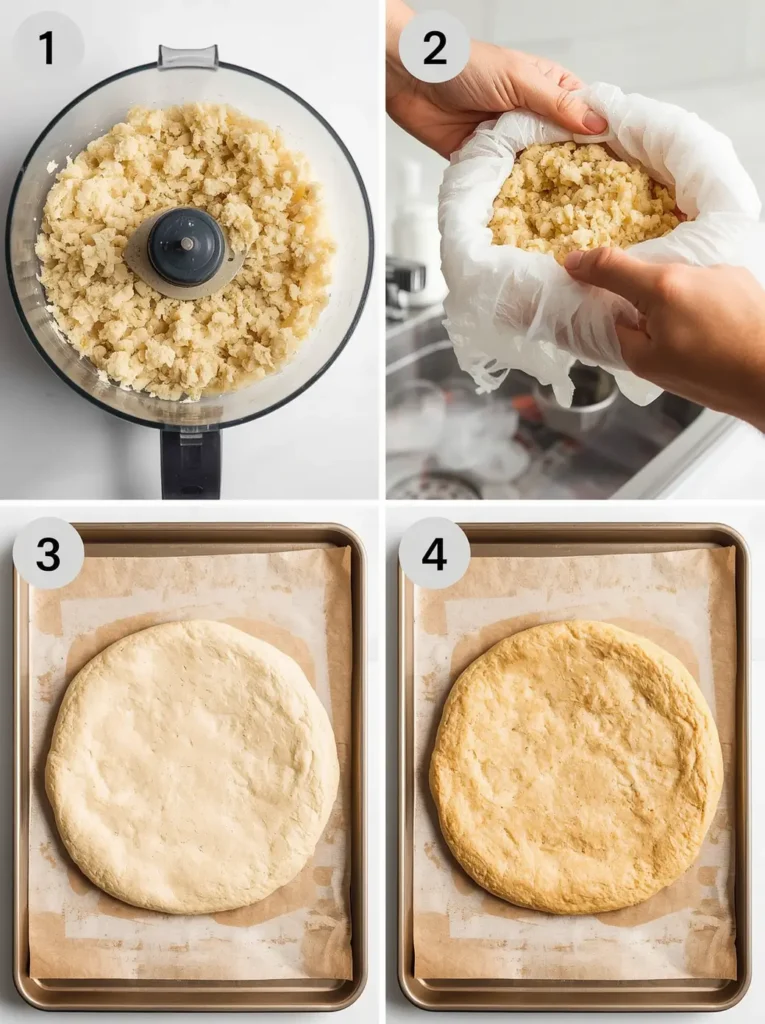
Step 4: Mix the Dough
In a large bowl, combine the squeezed cauliflower, egg, mozzarella, Parmesan, garlic powder, oregano, salt, and pepper. Mix well until a cohesive dough forms. It will feel slightly sticky; that’s perfectly normal.
Step 5: Shape and Pre-Bake the Crust
Preheat your oven to 425°F (220°C). Line a baking sheet or pizza pan with parchment paper and lightly grease it. Transfer the cauliflower mixture to the center and press it out with your hands into a round crust, about 10–12 inches in diameter and ¼ inch thick. Keep the edges slightly thicker for a proper “crust” feel. Bake for 20–25 minutes, or until the top is golden and the edges are lightly browned.
Step 6: Add Toppings and Bake Again
Remove the crust from the oven and add your favorite toppings, sauce, cheese, vegetables, pepperoni, whatever you love. Return to the oven and bake for another 8–10 minutes until the cheese is melted and bubbly. Let it cool for 2–3 minutes before slicing so the crust holds together.
Nutritional Information
The following values are based on one serving (⅙ of a 12-inch keto cauliflower pizza crust, crust only, no toppings):
| Nutrient | Amount per Serving |
|---|---|
| Calories | ~95 kcal |
| Total Fat | 6g |
| Saturated Fat | 3g |
| Protein | 7g |
| Total Carbohydrates | 4g |
| Dietary Fiber | 1.5g |
| Net Carbs | ~2.5g |
| Sodium | 220mg |
| Calcium | 15% DV |
Another way to look at it is that a standard pizza crust slice contains around 150–200 calories and over 30 grams of carbohydrates, while cauliflower pizza cuts net carbs by over 90%. Additionally, the cauliflower base is rich in vitamin C, vitamin K, and choline.
Healthier Alternatives for the Recipe
Want to customize your keto cauliflower pizza even further? Here are some smart swaps:
- Egg-free version: Use 1 tablespoon of psyllium husk powder mixed with 3 tablespoons of water as a binder.
- Higher protein crust: Add 2 tablespoons of unflavored whey or egg white protein powder to the mix.
- Dairy-free: Use nutritional yeast in place of Parmesan and a dairy-free mozzarella alternative.
- Extra fiber boost: Mix in 1 tablespoon of ground flaxseed for added omega-3s and a slightly nuttier flavor.
- Lower sodium: Use a no-salt seasoning blend and reduce or eliminate the Parmesan.
These tweaks keep the spirit of the cauliflower pizza crust intact while accommodating a wider range of dietary needs. If you’re also curious about other low-carb crust options, check out our Keto Pizza Crust Recipe for another reliable base that works beautifully with all your favorite toppings.
Serving Suggestions
One of the wonderful things about cauliflower crust pizza is its incredible versatility. Here are a few ideas to spark your creativity for your upcoming pizza night:
- Classic Margherita: Top with sugar-free marinara, fresh mozzarella, and torn basil leaves.
- BBQ Chicken Keto Pizza: Use a low-sugar BBQ sauce, rotisserie chicken, red onion, and smoked gouda.
- White Veggie Pizza: Spread ricotta as the base, add roasted zucchini, spinach, and sun-dried tomatoes.
- Breakfast Pizza: Top with scrambled eggs, crumbled bacon, and a drizzle of hot sauce for a perfect weekend brunch.
- Mini Pizzas: Press the dough into smaller rounds to create individual keto cauliflower pizza portions, great for meal prep or entertaining.

Looking for yet another creative low-carb pizza night option? Our Chicken Crust Pizza is a protein-packed alternative that’s just as satisfying and equally easy to top with all your favorites.
Common Mistakes to Avoid
Even seasoned home cooks stumble on cauliflower pizza crust the first time. Avoid these pitfalls:
- Not squeezing out enough moisture. The biggest mistake you can make is using wet cauliflower. It leads to a soggy crust. Squeeze it until your hands are sore.
- Skipping the pre-bake. The crust needs to firm up before you add toppings. Skipping this step causes it to fall apart.
- Making the crust too thin. Too thin and it becomes brittle. Aim for a consistent ¼-inch thickness.
- Overloading with toppings. Heavy toppings weigh down the crust. Keep it light; the cauliflower base isn’t as sturdy as bread dough.
- Not using parchment paper. The crust will stick without it. Always line your pan.
- Using cold ingredients. Let your egg come to room temperature before mixing so everything binds smoothly.
Storing Tips for the Recipe
Refrigerator: Once fully baked and cooled, store leftover cauliflower pizza in an airtight container in the fridge for up to 4 days. Reheat in the oven at 375°F for 5–7 minutes to restore crispiness. Avoid the microwave; it makes the crust rubbery.
Freezer: You can freeze the pre-baked crust (no toppings) for up to 2 months. Wrap it tightly in plastic wrap, then cover it with a layer of foil. Allow it to thaw in the refrigerator overnight before adding your toppings and baking it in the oven.
Meal prep tip: Make a double batch of the cauliflower mixture, pre-bake both crusts, and freeze one for a quick weeknight dinner.
Conclusion
Cauliflower pizza crust is proof that healthy eating doesn’t mean sacrificing the foods you love. With just a handful of simple ingredients, you can create a crispy, satisfying pizza base that’s low in carbs, high in nutrients, and completely delicious. Try the recipe this week, and let us know how it turned out! Drop your thoughts, photos, and creative topping ideas in the comments below. I’d love to see your creations.
FAQs
Is cauliflower pizza crust actually keto-friendly?
Yes! With only about 2.5g of net carbs per slice, keto cauliflower pizza crust fits comfortably within standard ketogenic macros. Just be mindful of your toppings; some sauces contain hidden sugars.
Why did my cauliflower crust turn out soggy?
The most common culprit is excess moisture. Make sure you cook the cauliflower rice fully and squeeze out as much liquid as possible using a kitchen towel before mixing the dough.
Can I make cauliflower pizza crust without cheese?
Yes, though the texture will be less firm. Use a combination of psyllium husk, almond flour, and a flax egg to hold the crust together without dairy.
Can I use frozen cauliflower rice for this recipe?
Absolutely. Frozen riced cauliflower is a great time-saver. Just make sure to thaw it completely and squeeze out all the moisture before using; frozen cauliflower tends to hold even more water than fresh.
How do I keep the crust from sticking to the pan?
Always make sure to use parchment paper and lightly grease it. Neglecting this step often leads to the crust tearing when you try to lift it.
Can I make the crust ahead of time?
Yes! Pre-bake the crust, let it cool, wrap it tightly, and refrigerate for up to 2 days or freeze for up to 2 months. Add toppings and finish baking when you’re ready to eat.

Cauliflower Pizza Crust
Course: DinnerCuisine: American6
servings20
minutes35
minutes55
minutesA crispy, golden keto cauliflower pizza crust made with simple ingredients. Low-carb, gluten-free, and ready in under an hour.
Ingredients
1 medium head of cauliflower (about 2–2½ cups riced)
1 large egg
1 cup shredded mozzarella cheese
2 tablespoons grated Parmesan cheese
½ teaspoon garlic powder
½ teaspoon dried oregano
¼ teaspoon salt
¼ teaspoon black pepper
Directions
- Rice the Cauliflower:
Cut cauliflower into florets and pulse in a food processor until you get a fine, rice-like texture. - Cook and Cool:
Microwave the riced cauliflower on high for 4–5 minutes, then spread it on a baking sheet and cool for 10 minutes. - Squeeze Out Moisture:
Transfer cooled cauliflower to a cheesecloth or kitchen towel and squeeze out as much liquid as possible. - Mix the Dough:
Combine cauliflower, egg, mozzarella, Parmesan, garlic powder, oregano, salt, and pepper in a large bowl and mix well. - Shape and Pre-Bake:
Press the mixture onto a parchment-lined baking sheet into a 10–12-inch round crust. Bake at 425°F for 20–25 minutes until golden. - Add Toppings and Bake Again:
Add your favorite toppings and bake for another 8–10 minutes until cheese is melted and bubbly.
Nutrition Facts
1 servings per container
Serving Size1 slice (1/6 of crust)
- Amount Per ServingCalories95
- % Daily Value *
- Total Fat
6g
8%
- Saturated Fat 3g 15%
- Sodium 220mg 10%
- Total Carbohydrate
4g
2%
- Dietary Fiber 1.5g 6%
- Protein 7g 15%
* The % Daily Value tells you how much a nutrient in a serving of food contributes to a daily diet. 2,000 calories a day is used for general nutrition advice.