Mediterranean Greek Salad with Feta
Table of Contents
Is Your Salad Actually Keeping You in Ketosis?
Did you know that the average restaurant salad can contain up to 30 grams of carbs, enough to knock you out of ketosis entirely? If you’re following a ketogenic diet, not every salad is your friend. But the Mediterranean Greek Salad with Feta is a glorious exception. This vibrant, flavor-packed dish is naturally low in carbs, loaded with healthy fats, and takes less than 15 minutes to pull together. The Mediterranean Greek Salad with Feta has been a cornerstone of one of the world’s healthiest diets for centuries, and it fits seamlessly into your keto lifestyle. Whether you’re new to keto or a seasoned low-carb eater, this recipe belongs in your weekly rotation.
Ingredients
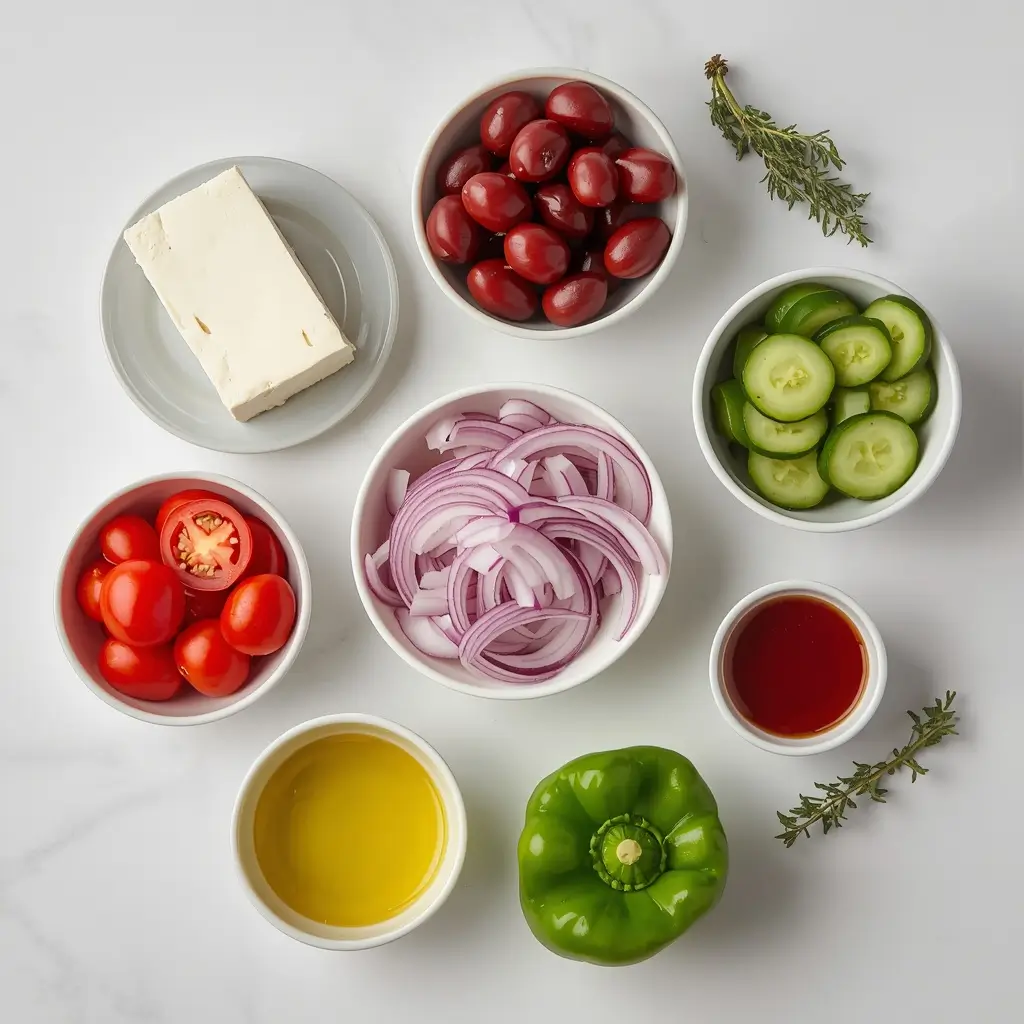
Here’s everything you need to build a stunning Mediterranean Greek salad. Each ingredient plays a role in flavor, texture, and nutrition, all working together.
For the salad:
- 4 cups romaine lettuce or crisp iceberg, roughly chopped
- 1 cup cherry tomatoes, halved (use sparingly if tracking net carbs closely)
- 1 medium cucumber, diced (English cucumber works best, fewer seeds, thinner skin)
- ½ red onion, thinly sliced
- ½ cup Kalamata olives, pitted
- 1 cup full-fat feta cheese, crumbled or cubed
- ½ green bell pepper, sliced into rings
- 1 tablespoon fresh oregano (or 1 teaspoon dried)
For the dressing:
- 3 tablespoons extra virgin olive oil
- 1½ tablespoons red wine vinegar
- 1 teaspoon Dijon mustard (optional, but adds depth)
- ½ teaspoon garlic powder
- Salt and black pepper to taste
Substitution ideas: Swap romaine for arugula for a peppery bite. Use goat cheese instead of feta if you prefer a creamier texture. Green olives can replace Kalamata for a milder flavor.
Timing
- Prep time: 12 minutes
- Cook time: 0 minutes (no cooking needed!)
- Total time: 12 minutes
That’s about 75% faster than the average keto meal, which typically takes around 45 minutes. This Greek Mediterranean salad is ideal for busy weeknights, meal-prep Sundays, or anytime you need a satisfying meal without turning on the stove.
Step-by-Step Instructions
Step 1: Prep Your Vegetables
Wash and dry all your produce thoroughly; excess water dilutes your dressing and makes the salad soggy fast. Chop your romaine into bite-sized pieces, halve your cherry tomatoes, dice the cucumber into half-inch chunks, and slice your red onion as thin as you can. A mandoline slicer makes quick work of this if you have one.
Step 2: Make the Dressing
In a small bowl or jar, whisk together the olive oil, red wine vinegar, Dijon mustard, garlic powder, salt, and pepper. Taste it and adjust. Want more tang? Add a splash more vinegar. Want it richer? A tiny extra drizzle of olive oil does the trick. Making your own dressing is key to keeping this Mediterranean Greek Salad with Feta truly keto-friendly, since bottled dressings often hide added sugars. According to the American Heart Association, extra virgin olive oil is one of the best sources of heart-healthy monounsaturated fats, making it the ideal base for any keto dressing.
Step 3: Combine the Base Ingredients
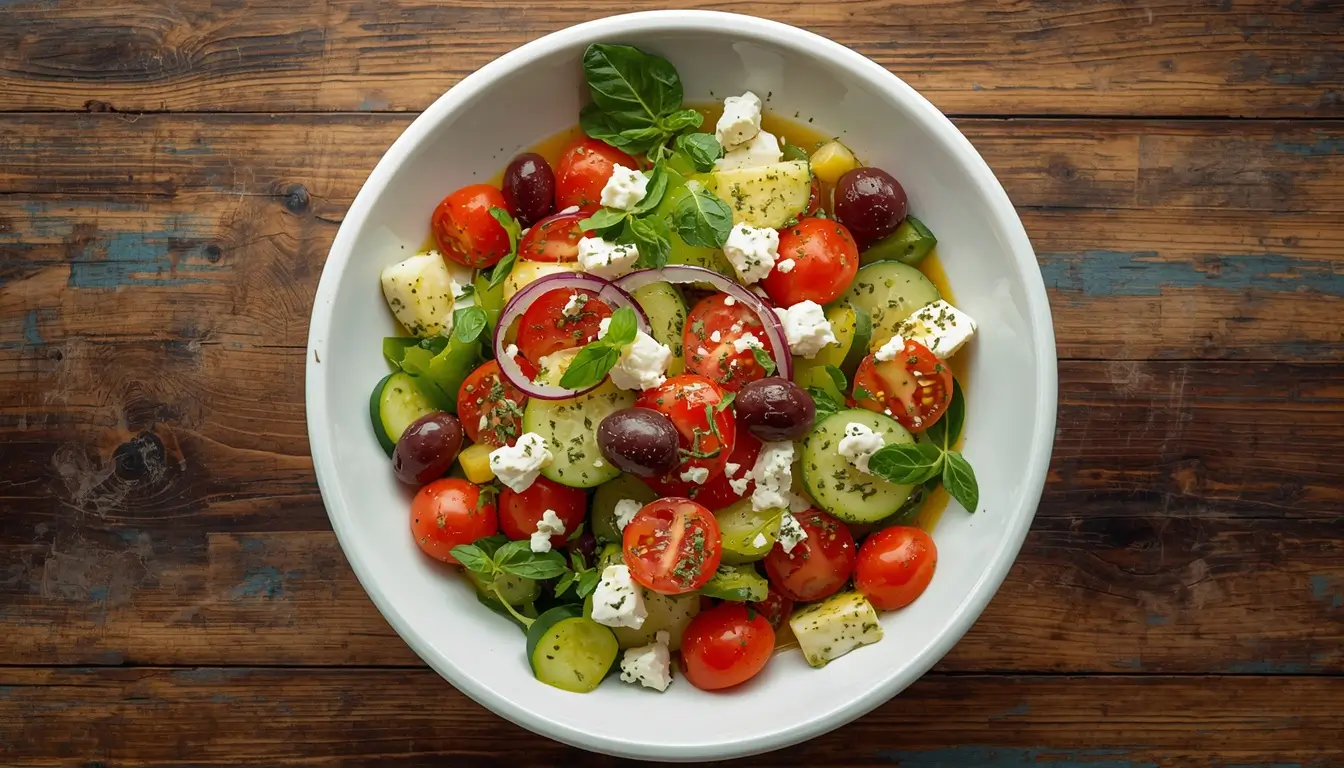
Add your romaine, cucumber, tomatoes, bell pepper, and red onion to a large salad bowl. Toss them gently so the colors and textures distribute evenly. At this stage, your bowl should look like a painting, with deep greens, vivid reds, and bright whites. This is the soul of a proper Mediterranean Greek salad recipe. If you enjoy bold, layered salads like this one, you’ll also love our Keto Cobb Salad with Avocado, another no-fuss, high-fat lunch that delivers on flavor without the carbs.
Step 4: Add Olives and Feta
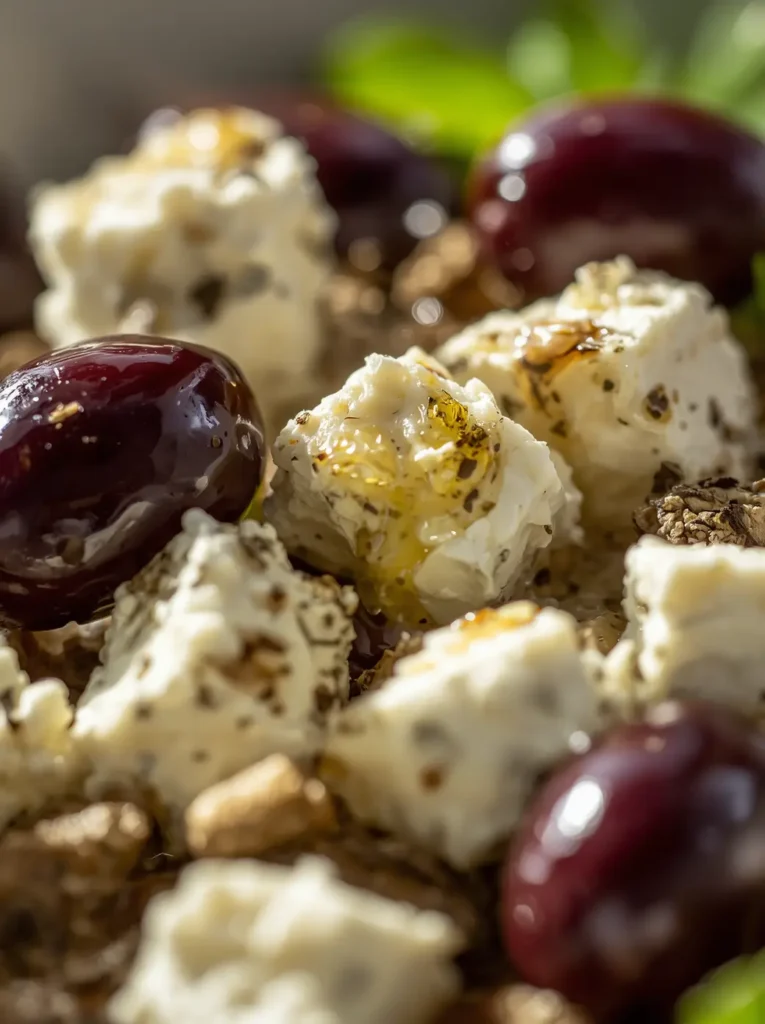
Scatter the Kalamata olives across the top, then crumble or cube the feta cheese and sprinkle it generously over the salad. Don’t be shy with the feta, it’s not just flavor, it’s fat, and fat keeps you full and in ketosis. The saltiness of the feta and olives together is part of what makes this Mediterranean Greek Salad with Feta so satisfying without needing anything extra.
Step 5: Dress and Serve
Drizzle the dressing evenly over the entire salad. Toss lightly; you want everything coated but not drenched. Finish with a pinch of dried oregano on top and serve immediately. If you’re prepping ahead, keep the dressing separate until you’re ready to eat.
Nutritional Information
Per serving (recipe makes 2 large servings):
| Nutrient | Amount |
|---|---|
| Calories | ~320 kcal |
| Total Fat | 27g |
| Net Carbohydrates | 6g |
| Dietary Fiber | 2g |
| Protein | 9g |
| Sodium | 720mg |
This Mediterranean Greek Salad with Feta has only 6g of net carbs per serving, making it a perfect fit within the standard keto daily limit of 20–50g net carbs. The high-fat content from olive oil, feta, and olives supports sustained ketone production. According to Healthline, the Mediterranean dietary pattern is consistently linked to reduced inflammation, better heart health, and improved metabolic markers, benefits that align perfectly with the goals of a well-formulated ketogenic diet. Feta cheese also provides calcium, phosphorus, and B vitamins, a nutritional profile that few salads can match.
Healthier Alternatives for the Recipe
This Mediterranean Greek salad recipe is already quite clean, but here are a few smart tweaks depending on your goals:
Lower sodium: Use a reduced-sodium feta or rinse standard feta under cold water before adding it. This can cut sodium by up to 30%.
Dairy-free keto: Replace feta with cubed avocado and a handful of toasted pine nuts. You’ll still get plenty of healthy fat and creaminess.
Higher protein: Add grilled chicken thighs, pan-seared salmon, or hard-boiled eggs. Any of these turns this side dish into a complete keto meal with ease. For another protein-rich option that pairs creamy avocado with tender chicken, check out our Chicken Avocado Salad; it’s a reader favorite for good reason.
Anti-inflammatory boost: Add a handful of fresh spinach or a tablespoon of hemp seeds for extra omega-3s and antioxidants, both of which pair beautifully with the Greek Mediterranean salad flavor profile.
Tomato-free option: If you’re tracking carbs strictly, skip the cherry tomatoes and add extra cucumber and olives instead.
Serving Suggestions
the Mediterranean Greek Salad with Feta is wonderfully versatile. Here are a few ways to serve it:
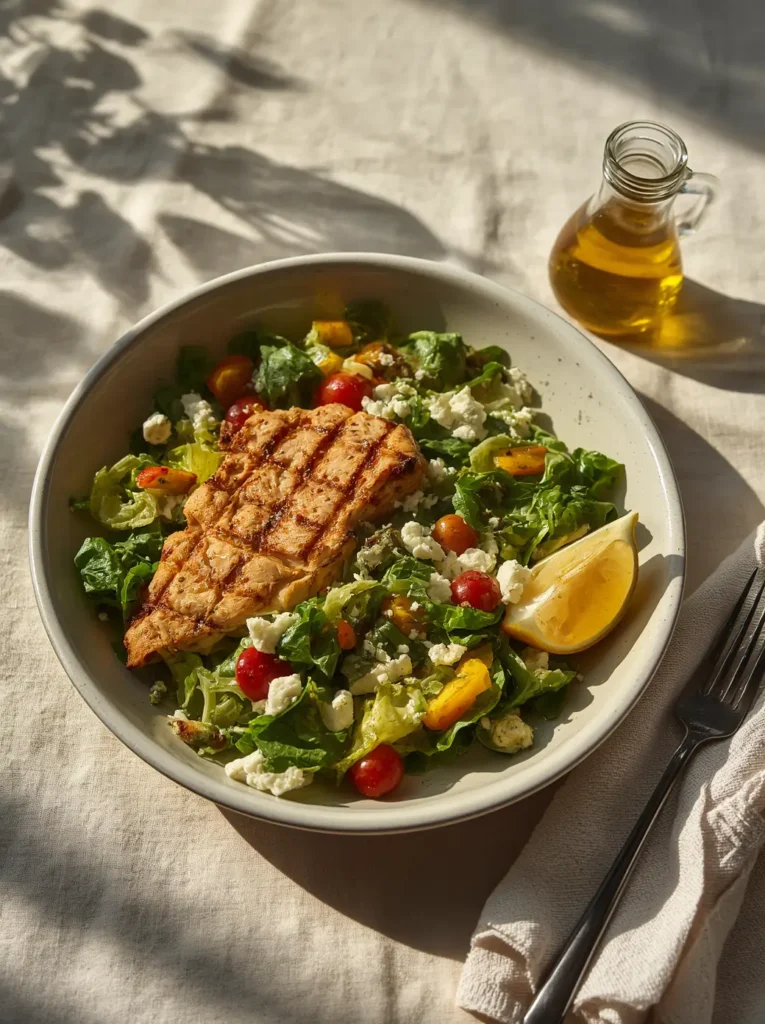
As a standalone meal: Double the portion and top with a generous piece of grilled salmon or chicken. A squeeze of fresh lemon right before eating brightens everything up.
As a side dish: Serve alongside keto-friendly dishes like a cauliflower rice bowl, zucchini noodles, or keto-friendly pita made from almond flour.
In a lettuce wrap: Spoon the salad into large butter lettuce cups for a fun, handheld version, great for lunchboxes or casual entertaining.
Mezze-style spread: Place it on a board alongside hummus (in small quantities), olives, cucumber slices, and deli meats for an impressive Mediterranean spread that looks like it took hours. Looking for more ideas to round out your midday meals? Browse our full collection of keto lunch recipes for easy, low-carb inspiration all week long.
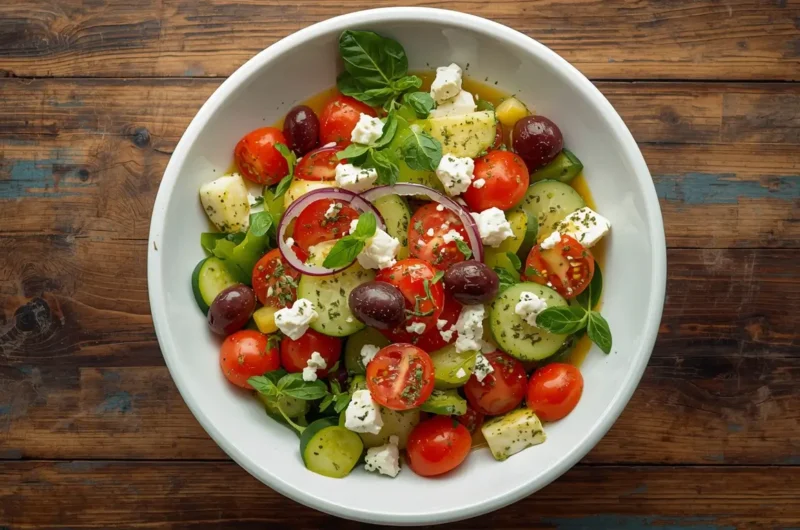
For an extra visual punch, serve the Mediterranean Greek Salad with Feta in a wide, shallow bowl, so all the colors show. Presentation genuinely affects how much people enjoy their food.
Common Mistakes to Avoid
Even a simple salad has its pitfalls. Here’s what to watch out for:
Using watery vegetables without drying them. Wet produce dilutes the dressing and turns your salad mushy within minutes. Always pat dry after washing.
Dressing the salad too early. The salt in the dressing draws moisture out of vegetables quickly. Dress right before serving, or keep the dressing on the side.
Buying low-fat feta. Low-fat versions are often higher in carbs and don’t deliver the rich, creamy flavor that makes this Mediterranean Greek Salad with Feta so satisfying. Full-fat is the right call for keto.
Using a generic olive oil. Extra virgin olive oil has a distinctly fruity, grassy flavor that cheap refined oils lack. It makes a noticeable difference in a dressing this simple.
Over-tossing. Toss gently; aggressive mixing breaks down the feta, bruises the lettuce, and turns what should be a textured, layered salad into a uniform mush.
Storing Tips for the Recipe
Undressed salad: Store in an airtight container in the refrigerator for up to 2 days. Keep the harder vegetables (cucumber, onion, olives) separate from the lettuce if possible to maintain crispness.
Dressing: Stored in a sealed jar in the fridge, the dressing keeps for up to 1 week. Give it a good shake before using, since the oil and vinegar will separate.
Feta: If you’ve already added the feta, the salad is best eaten the same day. Feta releases moisture as it sits, which softens the vegetables.
Meal prep tip: Chop all your vegetables at the start of the week and store them in separate containers. Each day, assemble a fresh Mediterranean Greek salad in minutes; there’s no excuse to skip lunch. If you like prepping salads in advance, our Keto Chicken Salad with Pecans is another excellent make-ahead option with great texture that holds up beautifully in the fridge.
Conclusion
The Mediterranean Greek Salad with Feta is proof that keto eating doesn’t have to be complicated or boring. With just 6g net carbs, bold flavors, and a 12-minute prep time, this Mediterranean Greek salad recipe checks every box. Try it this week, leave your comment below, share how you made it your own, and subscribe for more keto recipes delivered straight to you.
FAQs
Is Mediterranean Greek Salad with Feta actually keto-friendly?
Yes, with approximately 6g of net carbs per serving, it fits easily within keto macros. The high fat content from olive oil, feta, and olives makes it particularly well-suited to a ketogenic diet.
Can I make this salad ahead of time?
You can prep all the vegetables up to 24 hours in advance and store them separately. Keep the dressing and feta separate until you’re ready to serve to maintain the best texture and flavor.
What protein can I add to make it a full meal?
Grilled chicken, pan-seared shrimp, canned tuna, salmon, or hard-boiled eggs all work beautifully without adding significant carbs.
Is store-bought Greek salad dressing keto-safe?
Many bottled dressings contain added sugar or modified starches. Always check the label. Making your own with olive oil and red wine vinegar takes two minutes and guarantees it stays keto-compliant.
How is a Mediterranean Greek Salad different from a regular Greek salad?
The terms are often used interchangeably, but a Mediterranean Greek Salad with Feta tends to emphasize high-quality olive oil, fresh herbs like oregano, and generous use of olives, reflecting the broader traditional eating patterns of the Mediterranean diet.
Can I use a different cheese instead of feta?
Yes. Goat cheese is the closest substitute in terms of texture and tang. Halloumi also works well. Just ensure whatever cheese you choose is full-fat for the best keto results.
Mediterranean Greek Salad with Feta
Course: LunchCuisine: Mediterranean2
servings12
minutes12
minutesA quick and easy Mediterranean Greek Salad with Feta that’s fully keto-friendly, with only 6g net carbs per serving. Ready in just 12 minutes with no cooking required.
Ingredients
4 cups romaine lettuce, roughly chopped
1 cup cherry tomatoes, halved
1 medium English cucumber, diced
½ red onion, thinly sliced
½ cup Kalamata olives, pitted
1 cup full-fat feta cheese, crumbled
½ green bell pepper, sliced
1 tablespoon fresh oregano
3 tablespoons extra virgin olive oil
1½ tablespoons red wine vinegar
1 teaspoon Dijon mustard
½ teaspoon garlic powder
Salt and black pepper to taste
Directions
- Prep Your Vegetables:
Wash and dry all produce thoroughly. Chop romaine, halve cherry tomatoes, dice cucumber, and thinly slice red onion. - Make the Dressing:
Whisk together olive oil, red wine vinegar, Dijon mustard, garlic powder, salt, and pepper in a small bowl or jar. - Combine the Base Ingredients:
Add romaine, cucumber, tomatoes, bell pepper, and red onion to a large salad bowl and toss gently. - Add Olives and Feta:
Scatter Kalamata olives across the top, then crumble feta cheese generously over the salad. - Dress and Serve:
Drizzle the dressing evenly over the salad, toss lightly, finish with dried oregano, and serve immediately.
Nutrition Facts
1 servings per container
- Amount Per ServingCalories320
- % Daily Value *
- Total Fat
27g
35%
- Sodium 720mg 32%
- Total Carbohydrate
8g
3%
- Dietary Fiber 2g 8%
- Protein 9g 18%
* The % Daily Value tells you how much a nutrient in a serving of food contributes to a daily diet. 2,000 calories a day is used for general nutrition advice.