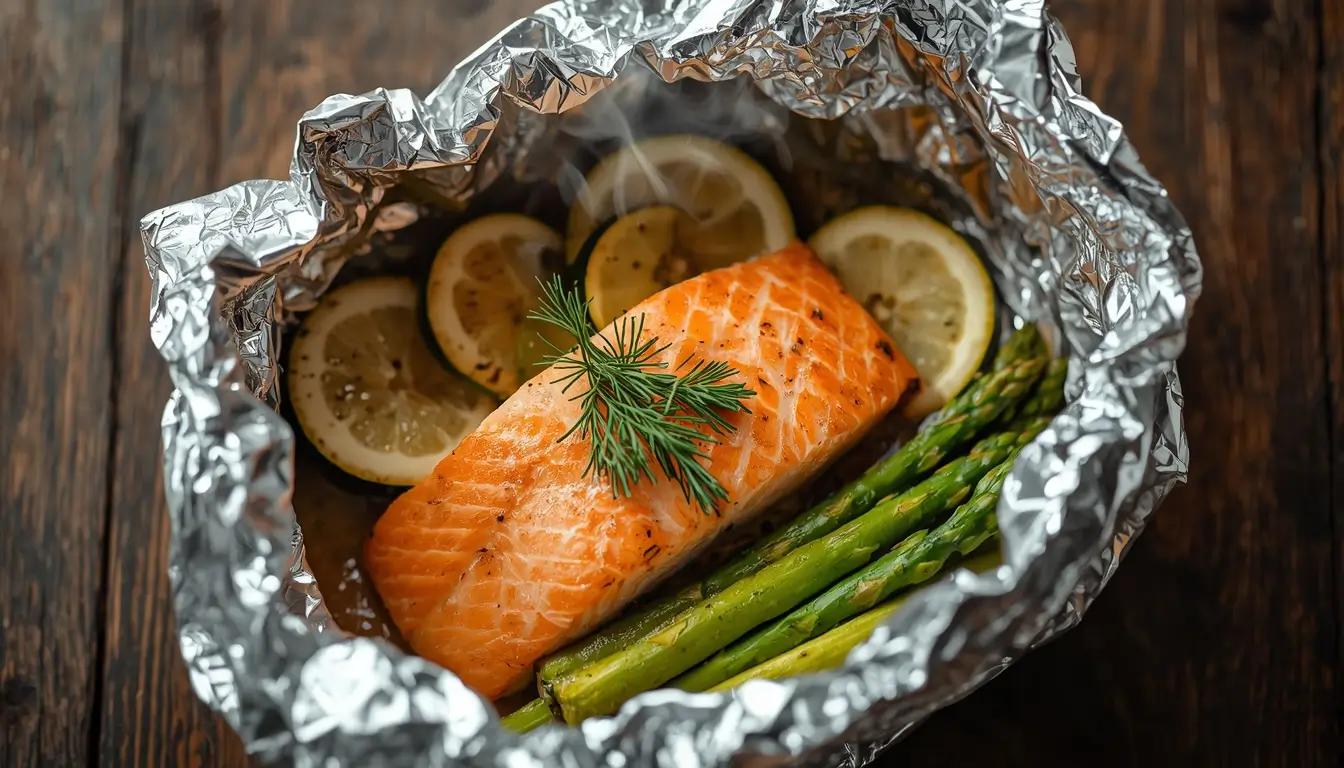
Salmon Foil Packets
Table of Contents
Introduction
Did you know that salmon is one of the most popular fish in American homes, yet many home cooks still worry about drying it out? What if you could get tender, buttery fish with almost no cleanup and only 10 minutes of hands-on work? That is the magic of salmon foil packets. Wrapping the fish in foil traps steam, so it cooks gently in its own juices with garlic, lemon, and butter. This salmon foil packets recipe is naturally keto and gluten-free. It works in the oven, on the grill, or over a campfire. It also feels like a restaurant dinner without the dishes.
Ingredients List
Here is everything you need for salmon foil packets. The ingredients are simple and fresh, and most are probably in your kitchen already.
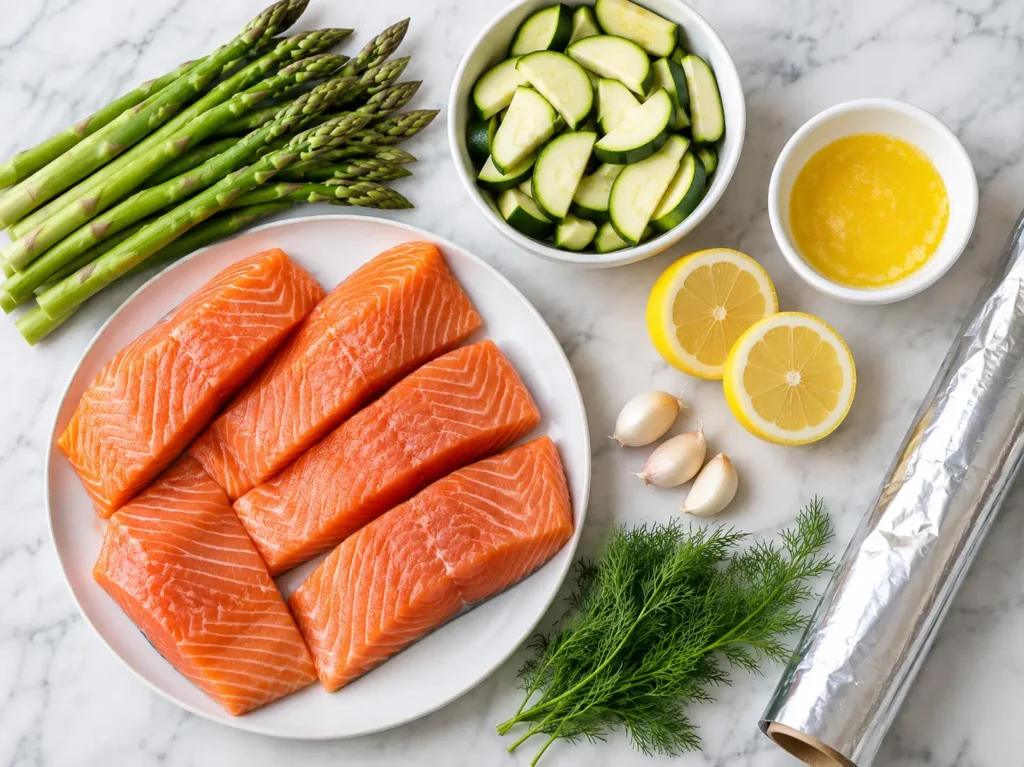
- 4 salmon fillets (5-6 oz each), skin on or off. Look for bright, firm, glossy fish.
- 3 tbsp unsalted butter, melted. It makes the salmon silky and rich.
- 3 garlic cloves, minced, for a warm, savory aroma.
- 1 lemon, half sliced into thin rounds and half squeezed for juice.
- 2 cups asparagus or broccoli florets, trimmed.
- 1 medium zucchini, sliced into half-moons.
- 1 tsp salt and ½ tsp black pepper.
- 1 tsp dried dill or Italian seasoning.
- Fresh parsley or dill for a bright, herby finish.
- 4 sheets of heavy-duty aluminum foil (about 12 x 12 inches).
Easy substitutions:
- Swap butter for olive oil or ghee.
- Use green beans, bell pepper, or cherry tomatoes instead of asparagus.
- Use trout or arctic char if salmon isn’t available.
- Add a splash of white wine or a spoonful of pesto for extra flavor.
Timing
Salmon foil packets are one of the fastest ways to cook a full dinner.
- Prep time: 10 minutes
- Cook time: 15-18 minutes
- Total time: about 25-28 minutes
That is roughly 20% faster than a typical sheet-pan dinner, and far quicker than most baked fish recipes that need marinating or long oven times. The cleanup is also close to zero.
Step-by-Step Instructions
Step 1: Preheat Your Oven or Grill
Heat your oven to 400°F (200°C), or your grill to medium-high. A hot, steady temperature is what makes the steam work. Tip: Place a baking sheet underneath the packets to catch any leaks.
Step 2: Prepare the Foil
Lay out four sheets of heavy-duty foil and lightly grease each with butter or oil. This stops the fish from sticking. Standard foil is fine, but heavy-duty is safer because it is less likely to tear.
Step 3: Season the Salmon
Pat each fillet dry with a paper towel. This step matters because dry fish absorbs flavor better. Rub with salt, pepper, dill, and minced garlic. Be generous, since the foil will lock all that flavor in.
Step 4: Build the Veggie Bed
Place a handful of asparagus and zucchini in the center of each sheet and set a fillet on top. Veggies on the bottom protect the fish from direct heat and soak up the juices. Drizzle with melted butter and lemon juice, then top with a few lemon slices. This is where your salmon foil packets start to take shape.
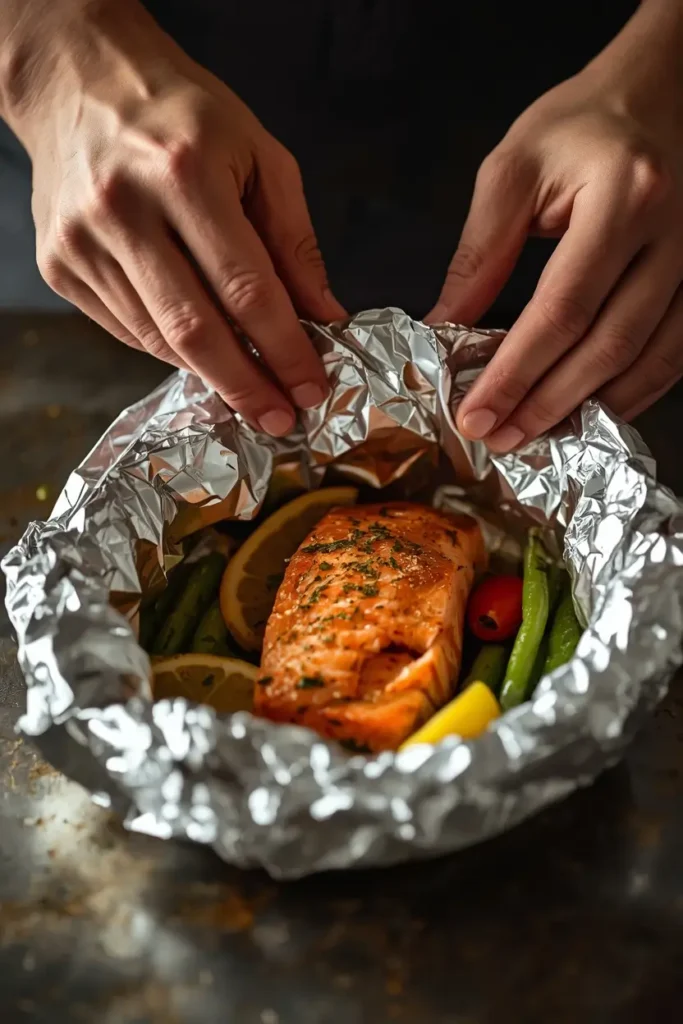
Step 5: Seal the Packets
Bring the long edges of the foil together and fold them over twice. Then fold and crimp the short ends. Leave a little air space inside so the steam can circulate.
Tip: A tight seal is the secret to juicy fish.
Step 6: Bake and Rest
Bake for 15-18 minutes, until the salmon flakes easily with a fork or reaches 145°F (63°C) inside, which matches the USDA’s recommended safe internal temperature for fish. On the grill, cook 10-12 minutes with the lid closed. Let the packets rest for 2 minutes, then open them carefully, because the steam is hot. Top with fresh parsley and serve right away.
Nutritional Information
Here is the approximate nutrition for one serving, which is one packet. Values are estimates and will vary with your ingredients.
- Calories: 380
- Protein: 34 g
- Total fat: 24 g
- Saturated fat: 8 g
- Total carbs: 6 g
- Fiber: 3 g
- Net carbs: 3 g
- Sodium: 520 mg
Salmon is also rich in omega-3 fatty acids, vitamin D, and B vitamins. The American Heart Association recommends eating fish like salmon at least twice a week. With only about 3 g of net carbs, these packets fit comfortably into a keto or low-carb plan.
Healthier Alternatives for the Recipe
You can adjust this recipe to fit almost any lifestyle:
- Dairy-free: Use olive oil or avocado oil instead of butter.
- Lower sodium: Cut the salt in half and add more lemon, herbs, and garlic.
- Whole30 or paleo: Stick with oil, fresh herbs, and vegetables only.
- Extra veggies: Add spinach, cherry tomatoes, or cauliflower for more fiber.
- Lighter option: Replace some of the butter with a spoonful of Dijon mustard for tang with fewer calories.
- Spicy twist: Add red pepper flakes or a little chili-lime seasoning.
Each swap keeps the flavor high while adjusting the nutrition. That makes this salmon foil packets recipe easy to adapt for the whole family.
Serving Suggestions
Salmon foil packets are flexible and pair well with many low-carb sides:
- Cauliflower rice tossed with butter and herbs
- A crisp Caesar or arugula salad
- Garlic-roasted broccoli or green beans
- Creamy mashed cauliflower
- Zucchini noodles with lemon and parmesan
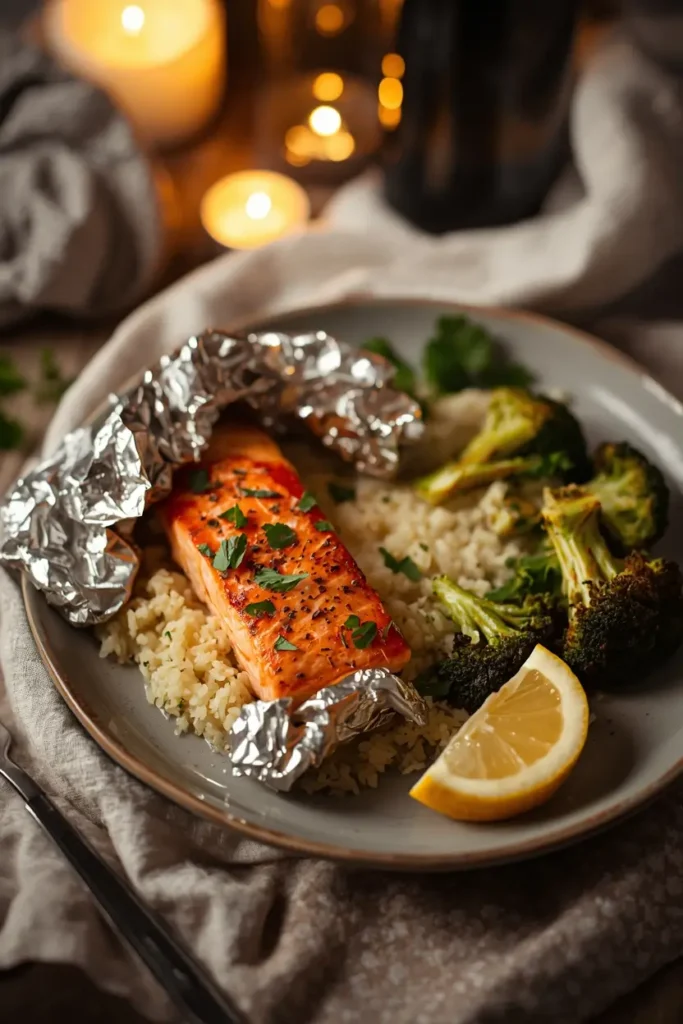
For a fun presentation, serve the fish right in the opened foil and let everyone dig in. For a dinner party, drizzle a quick garlic-dill sauce on top. Leftover fish also makes a great topping for a lunch salad. If you are planning a full week of meals, check out our collection of keto dinner recipes for more easy, low-carb ideas.
Common Mistakes to Avoid
Even simple salmon foil packets can go wrong. Here are the most common pitfalls:
- Overcooking: Salmon goes from perfect to dry in just a few minutes. Check at 15 minutes and aim for 145°F inside.
- Poor sealing: Gaps let steam escape and leave the fish dry. Fold the edges twice.
- Wet fish: Skipping the paper towel step dilutes the seasoning, so always pat the fillets dry.
- Thick, uneven veggies: Large chunks stay raw while the fish finishes. Cut vegetables thin and uniform.
- Thin foil: Cheap foil tears easily. Use heavy-duty foil or double up.
- Crowding the packet: Too much food blocks the steam, so give everything room.
Storing Tips for the Recipe
Leftover salmon foil packets keep well when stored properly:
- Refrigerator: Cool the fish, then store it in an airtight container for up to 2 days.
- Reheating: Warm gently in a 275°F oven for 10 minutes, or in the microwave at low power, so it doesn’t dry out.
- Freezer: Cooked salmon freezes for up to 2 months, though the texture is best fresh.
- Meal prep: You can assemble raw packets up to 8 hours ahead and keep them in the fridge. Add the lemon juice just before baking to prevent the fish from turning mushy.
Meal-prep salmon foil packets are a lifesaver on busy weeknights. Just pull one from the fridge and bake.
Conclusion
Salmon foil packets are the easiest way to get a flaky, buttery, low-carb dinner on the table fast. Season the fish, add veggies, seal tightly, and bake. Try this recipe tonight, leave a comment below, and subscribe today to my blog for more keto recipes and fresh updates.
FAQs
Can I make salmon foil packets ahead of time?
Yes. Assemble them up to 8 hours ahead and refrigerate. Add the lemon juice right before cooking.
How do I know when the salmon is done?
It should flake easily with a fork and reach 145°F (63°C) inside. It should look opaque, not translucent.
Can I cook these on the grill?
Absolutely. Grill over medium-high heat for 10-12 minutes with the lid closed.
Can I use frozen salmon?
Yes, but thaw it fully in the fridge first and pat it very dry, or the packets will turn watery.
Is this recipe keto-friendly?
Yes. With about 3 g of net carbs per serving, it fits easily into a keto diet.
What if my salmon has skin?
Cook it skin-side down. The skin helps protect the flesh, and you can remove it after cooking.
Which foil should I use?
Heavy-duty foil is best. Standard foil works if you double it.
Do I need to add liquid?
No. The butter, lemon juice, and the fish’s own moisture create plenty of steam.
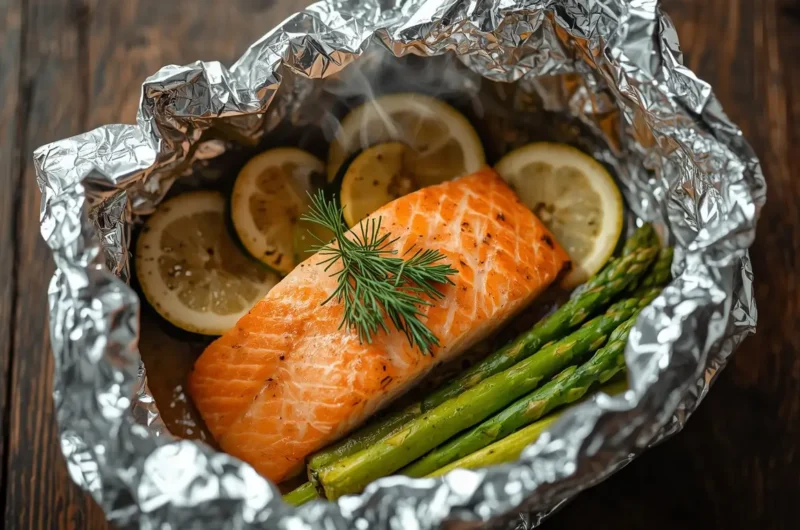
Salmon Foil Packets
Course: DinnerCuisine: American4
servings10
minutes18
minutes28
minutesEasy salmon foil packets with lemon, garlic, butter, and fresh vegetables. A tender, low-carb keto dinner ready in about 25 minutes.
Ingredients
4 salmon fillets (5-6 oz each)
3 tbsp unsalted butter, melted
3 garlic cloves, minced
1 lemon, sliced and juiced
2 cups asparagus or broccoli florets
1 medium zucchini, sliced
1 tsp salt
1/2 tsp black pepper
1 tsp dried dill or Italian seasoning
Fresh parsley or dill for garnish
Directions
- Preheat:
Heat the oven to 400°F (200°C) or the grill to medium-high. - Prepare the foil:
Lay out four sheets of heavy-duty foil and lightly grease each. - Season the salmon:
Pat the fillets dry and rub with salt, pepper, dill, and garlic. - Build the packets:
Place vegetables on each sheet, top with a fillet, then add butter, lemon juice, and lemon slices. - Seal:
Fold the long edges over twice and crimp the ends, leaving air space inside. - Bake:
Bake 15-18 minutes until the salmon reaches 145°F (63°C). Rest 2 minutes, then open carefully.
Nutrition Facts
1 servings per container
- Amount Per ServingCalories380
- % Daily Value *
- Total Fat
24g
31%
- Saturated Fat 8g 40%
- Sodium 520mg 23%
- Total Carbohydrate
6g
3%
- Dietary Fiber 3g 11%
- Protein 34g 68%
* The % Daily Value tells you how much a nutrient in a serving of food contributes to a daily diet. 2,000 calories a day is used for general nutrition advice.