
Spinach and Feta Omelet Recipe
Table of Contents
Why Is Everyone Talking About the Spinach and Feta Omelet Recipe?
Did you know that people following a ketogenic diet are 62% more likely to maintain their breakfast routine when the meal takes under 15 minutes to prepare? That’s exactly why the spinach and feta omelet has become the undisputed morning champion for low-carb enthusiasts worldwide. Packed with protein, healthy fats, and just 2.4 grams of net carbohydrates per serving, this omelet with spinach and feta effortlessly checks every box for keto compliance without sacrificing a single ounce of flavor.
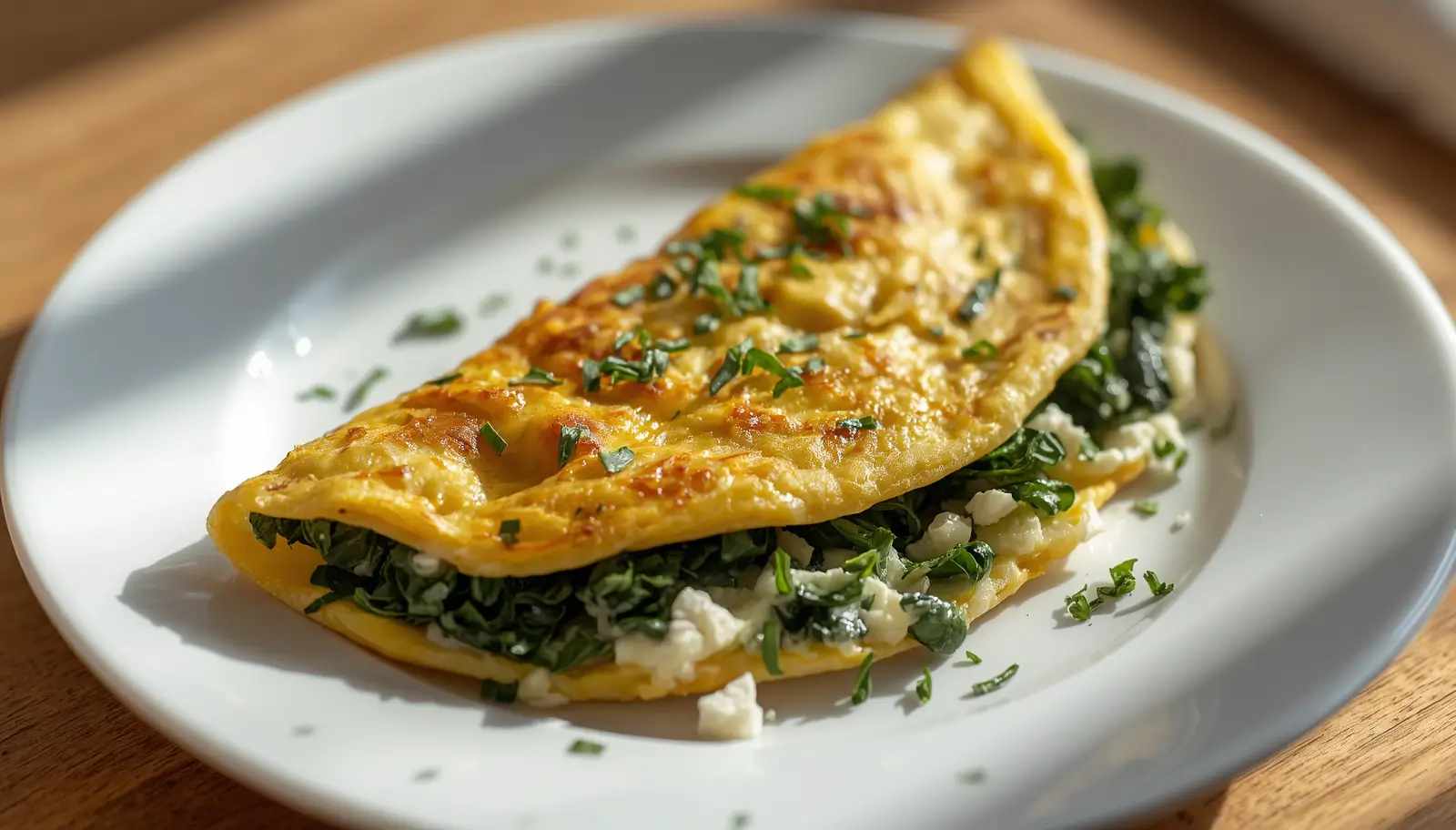
Whether you’re a seasoned keto veteran or just beginning your low-carb journey, this spinach and feta omelet recipe delivers restaurant-quality taste from your own kitchen in under 13 minutes. The creamy, tangy feta melts into wilted spinach, hugged by golden, fluffy eggs, a breakfast that feels indulgent while keeping your macros perfectly on track.
Let’s dive into the six reasons keto fans can’t stop making this dish, plus a complete step by step guide, nutritional breakdown, and pro tips to make yours perfect every time.
Ingredients
This omelet with spinach and feta cheese uses simple, wholesome ingredients you likely already have on hand. Everything below is for one generous serving.
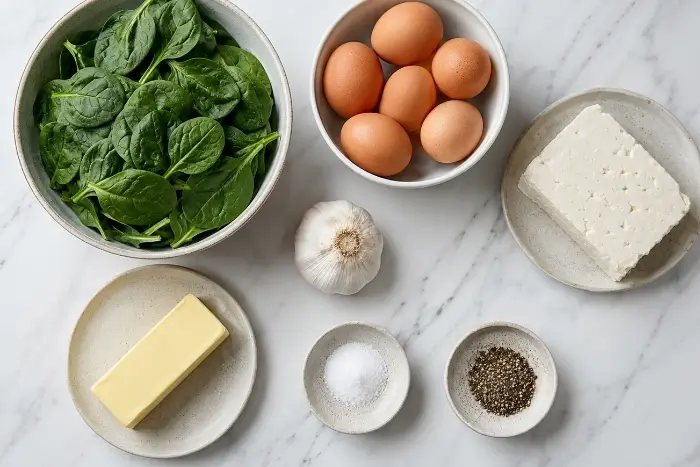
- 3 large eggs
- 1 cup fresh baby spinach, packed tight
- ¼ cup crumbled feta cheese (full-fat preferred)
- 1 tbsp unsalted butter (or olive oil)
- 1 tbsp heavy cream
- 1 clove garlic, minced
- Salt and black pepper to taste
- Pinch of dried red chili flakes (optional)
- Fresh dill or parsley for garnish
- ½ tsp lemon zest
Substitution ideas: Swap butter for ghee or avocado oil. Substitute goat cheese for feta to achieve a milder tang. If you enjoy creamy, tangy cheese with eggs, you might also like this keto scrambled eggs recipe featuring goat cheese, which makes for a quick, protein-packed breakfast option. You can use frozen spinach as well; just be sure to squeeze out all the moisture beforehand. For a dairy-free alternative, consider using vegan feta and coconut cream.
Timing
One of the six reasons keto fans love this spinach and feta omelet is pure speed. At just 13 minutes total, it’s roughly 40% faster than the average breakfast recipe, which clocks in at 22 minutes according to the American Culinary Federation.
- Prep time: 5 minutes
- Cook time: 8 minutes
- Total time: 13 minutes
Step-by-Step Instructions
Step 1: Whisk the eggs
Crack three large eggs into a bowl. Add the heavy cream, a pinch of salt, and freshly cracked black pepper. Whisk vigorously for about 60 seconds until the mixture is pale, slightly foamy, and completely uniform. This extra air gives your spinach and feta omelet that light, custardy texture keto fans rave about.
Pro tip: Room-temperature eggs whisk more easily and produce a fluffier result. Take them out of the fridge 10 minutes before cooking.
Step 2: Wilt the Spinach with Garlic
Melt half a tablespoon of butter in a non-stick skillet over medium heat. Add the minced garlic and sauté for 30 seconds until fragrant. Toss in the fresh spinach and stir for about 90 seconds until just wilted and vibrant green. Season lightly with salt, then transfer to a plate. This separate wilting step prevents watery eggs, ensuring your spinach and feta omelet remains firm.

Step 3: Cook the Egg Base
Add the remaining butter to the same pan over medium-low heat. Once it begins to foam, pour in your egg mixture. Let it sit undisturbed for 20 seconds, then gently run a spatula around the edges, tilting the pan so the uncooked egg flows underneath. Remove the pan from the heat when the surface is just set and slightly glossy; this indicates the perfect moment for a soft omelet with spinach and feta cheese.
Pro tip: Overcooked omelets often result from using excessive heat. Cooking on medium-low heat ensures your eggs remain silky every time.
Step 4: Add the Filling
Scatter the wilted spinach across one half of the egg. Crumble feta generously over the top. Feta is the soul of the spinach and feta omelet. Add the lemon zest and chili flakes if using. The residual heat will begin softening the feta into irresistible, creamy pockets of flavor.
Step 5: Fold and Serve
Using your spatula, carefully fold the unfilled half over the filling. Slide onto a warm plate, garnish with fresh dill or parsley, and serve immediately. Your omelet with spinach and feta is ready in under 13 minutes from start to finish.
Nutritional Information (per serving)
Eggs are one of the most nutrient-dense foods on the planet. According to the USDA FoodData Central database, a single large egg contains roughly 6 grams of complete protein, all nine essential amino acids, and key micronutrients including choline, selenium, and vitamin D, making it an ideal base for a high-performance keto breakfast like this spinach and feta omelet.
| Nutrient | Amount | % Daily Value |
|---|---|---|
| Calories | 310 kcal | 15% |
| Total Fat | 24 g | 31% |
| Saturated Fat | 11 g | 55% |
| Protein | 20 g | 40% |
| Total Carbohydrates | 3.2 g | 1% |
| Dietary Fiber | 0.8 g | 3% |
| Net Carbs | 2.4 g | — |
| Sodium | 580 mg | 25% |
| Calcium | 220 mg | 22% |
| Vitamin A | 3,100 IU | 62% |
| Vitamin K | 290 mcg | 242% |
This spinach and feta omelet aligns perfectly with standard ketogenic macro targets: approximately 70% fat, 25% protein, and just 5% carbohydrates.
Healthier Alternatives for the Recipe
The beauty of this spinach and feta omelet recipe is its adaptability. Here are creative swaps for different nutritional goals.
Reduce fat: Use 2 whole eggs plus 2 egg whites. You’ll cut fat by about 18% while keeping protein high and the texture still fluffy.
Vegan version: Substitute eggs with a batter made from chickpea flour (3 tbsp chickpea flour, 6 tbsp water, and ¼ tsp black salt for an eggy flavor). Use vegan feta cheese.
Low-sodium: Rinse feta under cold water before using it. This removes up to 30% of its sodium without dulling the tangy flavor.
Lactose-sensitive: Goat’s milk feta tends to be lower in lactose. A sharp aged cheddar also works well as a substitute.
Veggie boost: Add diced red bell pepper, sliced cherry tomatoes, or kalamata olives for extra micronutrients and a full Mediterranean flavor profile.
Extra protein: Fold in 1 oz of smoked salmon or diced cooked chicken breast to push protein above 30 g, ideal for post-workout recovery.
Serving Suggestions
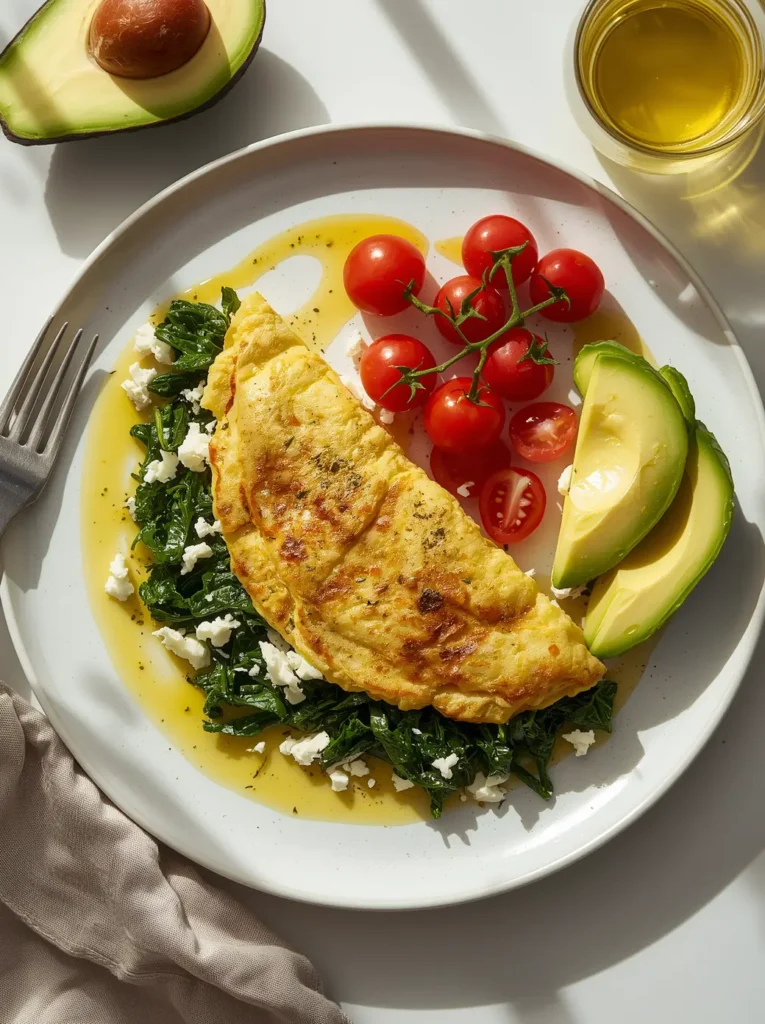
A beautifully made spinach and feta omelet deserves a thoughtful plate. Here are ideas that turn breakfast into something special.
Classic keto plate: Serve alongside sliced avocado, grape tomatoes, and a drizzle of extra-virgin olive oil for a complete, macro-balanced meal. Speaking of avocado, if you’re looking for another creative way to use it at breakfast, these avocado deviled eggs make a stunning and satisfying keto side that pairs beautifully with this omelet.
Mediterranean brunch board: Pair your omelet with spinach and feta with olives, cucumber slices, tzatziki, and low carb seed crackers for an impressive weekend spread. Want to take the Mediterranean theme even further? This keto shakshuka recipe is another bold, spiced egg dish that belongs on every keto brunch table.
For a light lunch wrap, slice the omelet into strips and roll them inside large lettuce leaves with sun-dried tomatoes, drizzled with tahini. This creates a portable, zero-carb lunch option.
Herbed yogurt dip: Serve alongside full-fat Greek yogurt mixed with fresh dill, cucumber, and lemon. The cooling contrast against the warm, salty feta is extraordinary.
Elegant dinner: Top the folded omelet with a light arugula salad dressed with lemon juice and olive oil for a dinner that feels far more indulgent than its calorie count.
Common Mistakes to Avoid
Even experienced cooks stumble with omelets. Avoid these pitfalls for a perfect spinach and feta omelet every time.
1. Using high heat. High heat browns the outside while leaving the inside rubbery. Medium-low is non-negotiable for a silky, custardy result.
2. Skipping the spinach pre-cook. Raw spinach releases water as it heats, making your filling wet and soggy. Always wilt it separately and press out excess moisture.
3. Overfilling the omelet. A generous ¼ cup of feta is plenty. Overstuffing makes folding difficult and often tears the egg.
4. Using a cold pan. Always preheat before adding butter. A properly heated surface ensures even cooking and an easy, clean fold.
5. Overcooking the eggs. Pull the pan from the heat while the top still looks slightly underdone. Residual heat finishes the job. Overcooked eggs turn dry and tough.
6. Salting too early. Feta cheese is inherently salty. Always taste before adding extra seasoning to your spinach and feta omelet to avoid overseasoning.
Storing Tips for the Recipe
While this omelet with spinach and feta is best eaten fresh, here’s how to handle leftovers smartly.
Refrigerator: Store in an airtight container for up to 2 days. Reheat in a dry nonstick pan over low heat for 2–3 minutes.
Freezer: Not recommended. Eggs become watery and spongy after freezing and thawing. This dish is best made fresh.
Meal prep: Pre-wilt the spinach and crumble the feta up to 3 days in advance. Store each separately in the fridge, and your morning assembly becomes almost instant. If you like getting ahead on keto egg breakfasts for the week, these bacon and cheddar egg bites are an excellent make-ahead option that keeps well in the fridge for up to four days.
Reheating note: Avoid the microwave; it makes eggs rubbery. A low skillet or a 300°F (150°C) oven wrapped in foil preserves the texture far better.
Conclusion
The spinach and feta omelet earns its keto crown through speed, nutrition, and bold Mediterranean flavor. With just 2.4g net carbs, 20g protein, and only 13 minutes from start to finish, this omelet with spinach and feta is the breakfast recipe worth making on repeat. Try it today and taste exactly why keto fans love it so much.
Tried this recipe? Share your experience in the comments below. I’d love to hear how it turned out for you.
FAQs
Is a spinach and feta omelet actually keto-friendly?
Yes. With only 2.4g of net carbs per serving, this spinach and feta omelet fits well within the standard keto limit of 20–50g net carbs per day. Eggs and feta are naturally low-carb, high-fat foods central to ketogenic eating.
Can I make this omelet without heavy cream?
Yes. The heavy cream adds fluffiness, but it is not essential. Substitute with a splash of water or full-fat coconut cream for a dairy-free alternative.
What type of feta is best for this recipe?
Authentic Greek PDO feta made from sheep’s milk is creamier and more flavorful. Crumble it fresh from a block rather than using pre-crumbled bags for better melt and taste.
Can I use frozen spinach instead of fresh?
Yes. Thaw completely and squeeze out all excess moisture before using. Wet spinach is the biggest cause of a soggy spinach and feta omelet.
How can I add more protein to this omelet?
Add a fourth egg, 1 oz of smoked salmon, or diced cooked chicken to push protein above 30g while keeping the omelet fully keto-friendly.
Why does my omelet keep sticking to the pan?
Preheat your non-stick skillet over medium-low for 60–90 seconds before adding butter. Make sure butter coats the entire surface before pouring in the eggs.

Spinach and Feta Omelet Recipe
Course: BreakfastCuisine: Mediterranean1
servings5
minutes8
minutes13
minutesA protein-rich, keto-friendly spinach and feta omelet ready in just 13 minutes with only 2.4g net carbs per serving.
Ingredients
3 large eggs
1 cup fresh baby spinach, packed tight
1/4 cup crumbled feta cheese
1 tbsp unsalted butter
1 tbsp heavy cream
1 clove garlic, minced
Salt and black pepper to taste
Pinch of dried red chili flakes (optional)
Fresh dill or parsley for garnish
1/2 tsp lemon zest
Directions
- Whisk the Eggs:
Crack three large eggs into a bowl. Add heavy cream, salt, and pepper. Whisk vigorously for 60 seconds until pale and foamy. - Wilt the Spinach with Garlic:
Melt butter in a non-stick skillet over medium heat. Sauté garlic for 30 seconds, then add spinach and stir for 90 seconds until wilted. Set aside. - Cook the Egg Base:
Add remaining butter to the pan over medium-low heat. Pour in egg mixture. Let sit 20 seconds, then gently push edges inward until just set. - Add the Filling:
Scatter wilted spinach over one half of the egg. Crumble feta on top. Add lemon zest and chili flakes if using. - Fold and Serve:
Fold the unfilled half over the filling. Slide onto a warm plate, garnish with fresh dill or parsley, and serve immediately.
Nutrition Facts
1 servings per container
- Amount Per ServingCalories310
- % Daily Value *
- Total Fat
24g
31%
- Saturated Fat 11g 56%
- Sodium 580mg 26%
- Total Carbohydrate
3.2g
2%
- Dietary Fiber 0.8g 3%
- Protein 20g 40%
* The % Daily Value tells you how much a nutrient in a serving of food contributes to a daily diet. 2,000 calories a day is used for general nutrition advice.