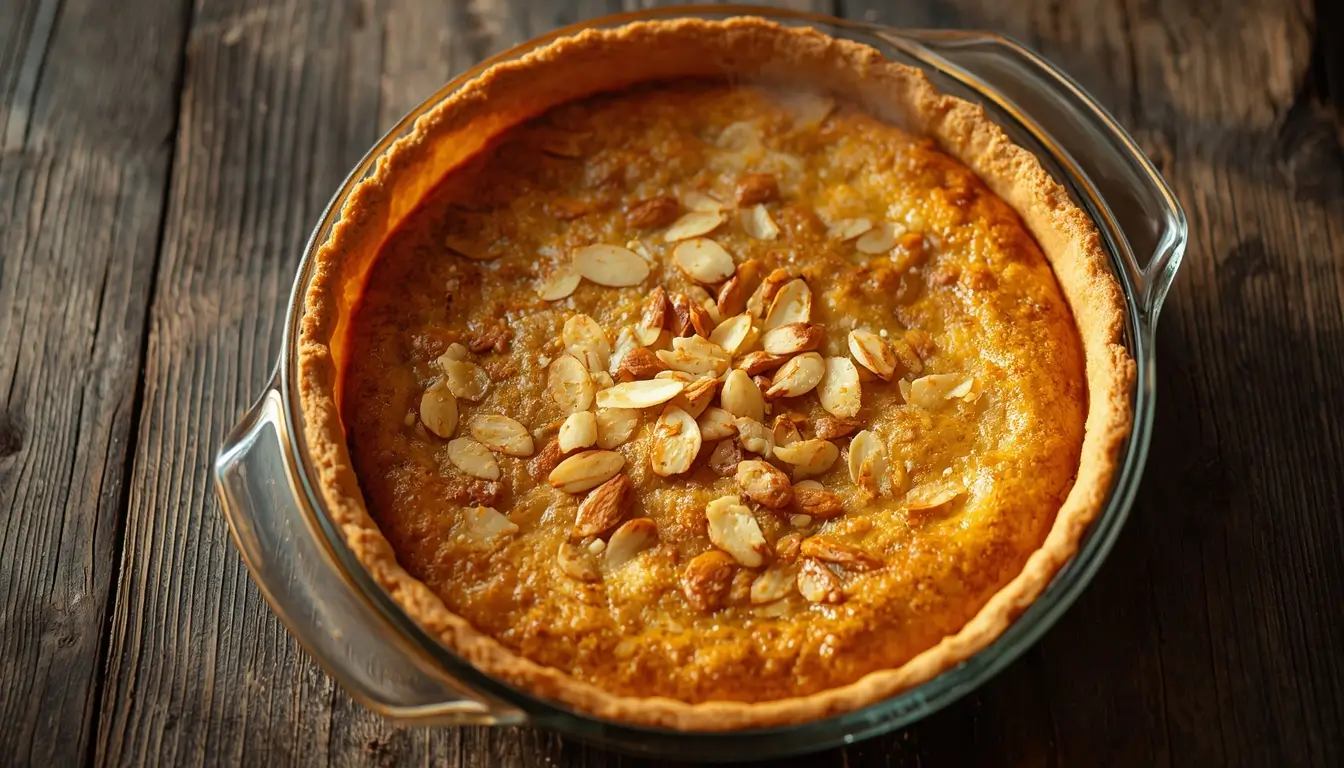
Almond Flour Pie Crust
Table of Contents
Introduction
Did you know that a traditional pie crust can pack over 40 grams of carbs into a single slice before you even add the filling? If you’re following keto, that’s basically your whole day’s carb budget gone in one bite. That’s exactly why so many low-carb bakers have switched to an almond flour pie crust: it delivers the same flaky, buttery bite you remember, but with a fraction of the carbs and none of the sugar spike.
This almond flour pie crust recipe uses just five ingredients, comes together in one bowl, and holds up beautifully whether you’re baking a sweet custard pie or a savory quiche. If you’ve ever assumed a keto crust has to be dense, crumbly, or “close enough,” this recipe is here to challenge that belief.
Ingredients
Here’s everything you need for this almond flour pie crust:
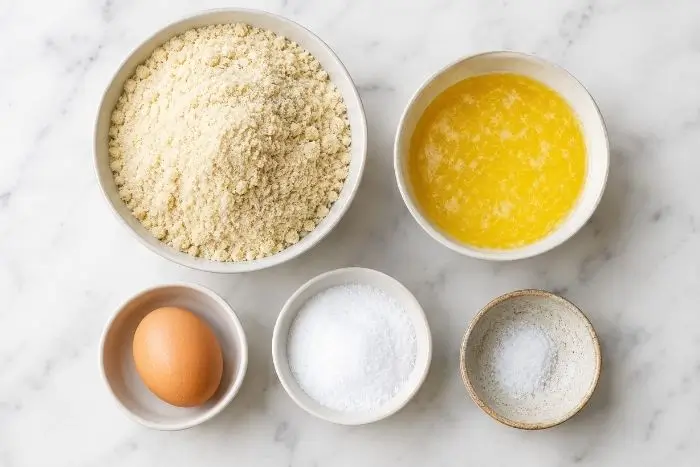
- 2 cups blanched almond flour – finely ground for the smoothest texture (avoid almond meal, which is coarser and leaves a gritty crust)
- 1/4 cup melted butter – or coconut oil for a dairy-free version
- 1 large egg – helps bind the dough so it holds its shape when sliced
- 1 tablespoon sweetener of choice – erythritol or allulose work well; skip this entirely for a savory crust
- 1/4 teaspoon salt – balances the sweetness and rounds out the flavor
Substitution tip: If you’re nut-free, sunflower seed flour can stand in for almond flour in equal amounts, though the crust will have a slightly denser bite.
Almond flour consistently ranks as one of the most popular keto-friendly flours for exactly this reason: it bakes up tender and holds together well, unlike many other low-carb flour options. For a closer look at how it compares to other keto flours, Healthline’s breakdown of keto-friendly flours is a solid resource.
Timing
- Prep time: 10 minutes
- Chill time: 15 minutes
- Bake time: 12–15 minutes
- Total time: about 40 minutes
That’s roughly 30% faster than a traditional pastry crust, which typically requires a longer chill time to keep the butter cold and the gluten relaxed. Because this almond flour pie crust recipe skips gluten entirely, you can skip the long rest and get straight to baking.
Step-by-Step Instructions
Step 1: Mix the Dry Ingredients
In a medium bowl, whisk together the almond flour, salt, and sweetener (if using). Breaking up any clumps here makes the dough easier to work with later.
Step 2: Add the Wet Ingredients
Pour in the melted butter and crack in the egg. Stir until a soft, slightly sticky dough forms. It should hold together when pressed between your fingers.
Step 3: Chill the Dough
Wrap the dough and refrigerate for 15 minutes. This firms up the fat, which makes the dough far easier to press into your pan without tearing.
Step 4: Press Into the Pan
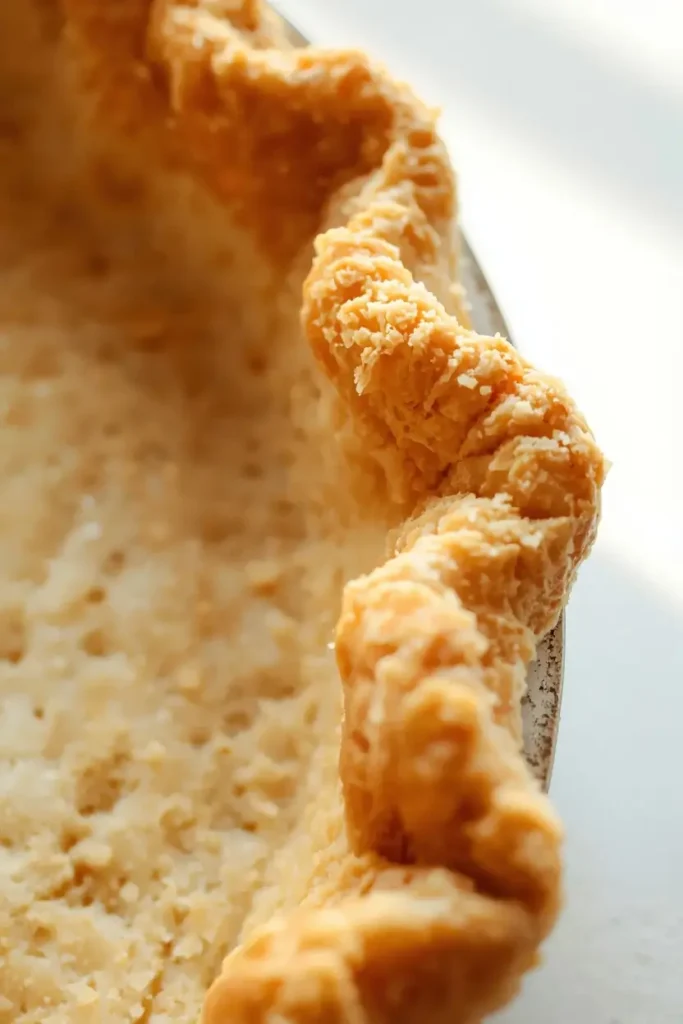
Place the dough in a 9-inch pie pan and press it evenly across the bottom and up the sides using your fingers or the bottom of a measuring cup. Aim for an even thickness to prevent overbaking the edges.
Step 5: Pre-Bake (Blind Bake)
Prick the bottom a few times with a fork and bake at 350°F for 12–15 minutes, until golden around the edges. If making a no-bake filling, this step fully cooks the crust; for baked fillings, pull it out a few minutes early so it finishes cooking with the filling.
Nutritional Information
Per slice (based on 8 slices per crust):
- Calories: ~180
- Net carbs: 3g
- Protein: 6g
- Fat: 16g
- Fiber: 3g
Compared to a standard wheat-flour pie crust, which averages around 20g of net carbs per slice, this almond flour pie crust cuts carbs by roughly 85% while adding more protein and fiber per serving. These figures are based on standard nutrient values for blanched almond flour reported in the USDA FoodData Central database.
Healthier Alternatives for the Recipe
- Lower-fat version: Swap melted butter for unsweetened applesauce to reduce fat, though the texture will be softer.
- Egg-free version: Replace the egg with 1 tablespoon of ground flaxseed mixed with 3 tablespoons of water, rested for 5 minutes.
- Extra-fiber boost: Add 1 tablespoon of ground flaxseed or psyllium husk to the dry mix for added structure and fiber.
- Nut-free version: Use sunflower seed flour, though note it can turn the crust slightly green when it reacts with baking soda-based fillings.
Serving Suggestions
This almond flour pie crust recipe is versatile enough for both sweet and savory pies:
- Fill it with a spiced custard for a holiday-ready dessert, similar to the filling in our keto pumpkin pie.
- Use it as the base for a keto quiche with spinach, mushrooms, and gruyère for a savory option.
- Go bright and citrusy with a filling inspired by our keto key lime pie.
- Give it a cozy fall spin by topping it with the filling from our keto apple pie.
- Layer it with a nutty, caramel-like filling like the one in our sugar-free pecan pie.
- Serve alongside a dollop of unsweetened whipped cream to round out the richness of the nutty crust.

Looking for more inspiration? Browse our full collection of keto dessert recipes for even more ways to put this crust to use.
Common Mistakes to Avoid
- Using almond meal instead of blanched almond flour. Almond meal is coarser and leaves the crust gritty rather than tender.
- Skipping the chill time. Warm dough is sticky and difficult to press evenly, leading to thin, weak spots that crack.
- Overbaking the edges. Almond flour browns faster than wheat flour, so check the crust a few minutes early to avoid a burnt rim.
- Pressing the dough too thin. A thin crust is more likely to crack once it’s filled and sliced.
Storing Tips
- Refrigerator: Store a baked, unfilled crust wrapped tightly for up to 4 days.
- Freezer: Freeze the pressed (unbaked) dough directly in the pie pan, wrapped well, for up to 2 months. Bake straight from frozen, adding a few extra minutes.
- Filled pie: Once filled, store covered in the refrigerator and consume within 3–4 days for the best texture.
Conclusion
This almond flour pie crust proves that keto baking doesn’t mean sacrificing flavor or texture. With five simple ingredients and under 40 minutes, you get a sturdy, flaky crust ready for any filling. Try this almond flour pie crust recipe today, leave a comment below, or subscribe for more low-carb baking inspiration.
FAQs
Can I make this almond flour pie crust ahead of time?
Yes, the dough can be pressed into the pan and refrigerated for up to 2 days before baking, or frozen for longer storage.
Why is my almond flour pie crust crumbly?
This usually means the dough wasn’t chilled long enough, or too little fat was used. Make sure the butter is fully incorporated before chilling.
Can I use this crust for a no-bake pie?
Yes, simply fully bake the crust first (the full 12–15 minutes) and let it cool completely before adding a no-bake filling.
Is almond flour pie crust keto-friendly?
Absolutely, at just 3g net carbs per slice, this almond flour pie crust recipe fits easily into a standard keto macro range.
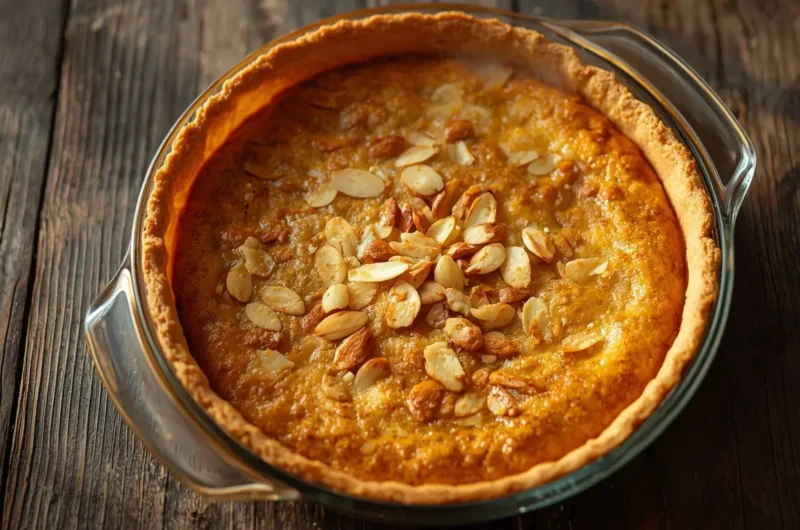
Almond Flour Pie Crust
Course: DessertCuisine: American8
servings25
minutes15
minutes40
minutesAn easy, flaky almond flour pie crust made with just 5 ingredients. This keto almond flour pie crust recipe is low-carb, gluten-free, and ready in about 40 minutes.
Ingredients
2 cups blanched almond flour
1/4 cup melted butter (or coconut oil for dairy-free)
1 large egg
1 tablespoon sweetener of choice (erythritol or allulose)
1/4 teaspoon salt
Directions
- Mix the Dry Ingredients:
Whisk together the almond flour, salt, and sweetener in a medium bowl, breaking up any clumps. - Add the Wet Ingredients:
Pour in the melted butter and egg, stirring until a soft, slightly sticky dough forms. - Chill the Dough:
Wrap the dough and refrigerate for 15 minutes to firm up the fat before shaping. - Press Into the Pan:
Press the dough evenly into a 9-inch pie pan, across the bottom and up the sides. - Pre-Bake (Blind Bake):
Prick the bottom with a fork and bake at 350°F for 12-15 minutes until golden around the edges.
Nutrition Facts
1 servings per container
Serving SizePer slice
- Amount Per ServingCalories180
- % Daily Value *
- Total Fat
16g
21%
- Total Carbohydrate
6g
3%
- Dietary Fiber 3g 11%
- Protein 6g 12%
* The % Daily Value tells you how much a nutrient in a serving of food contributes to a daily diet. 2,000 calories a day is used for general nutrition advice.