Keto Eggnog
Table of Contents
Introduction
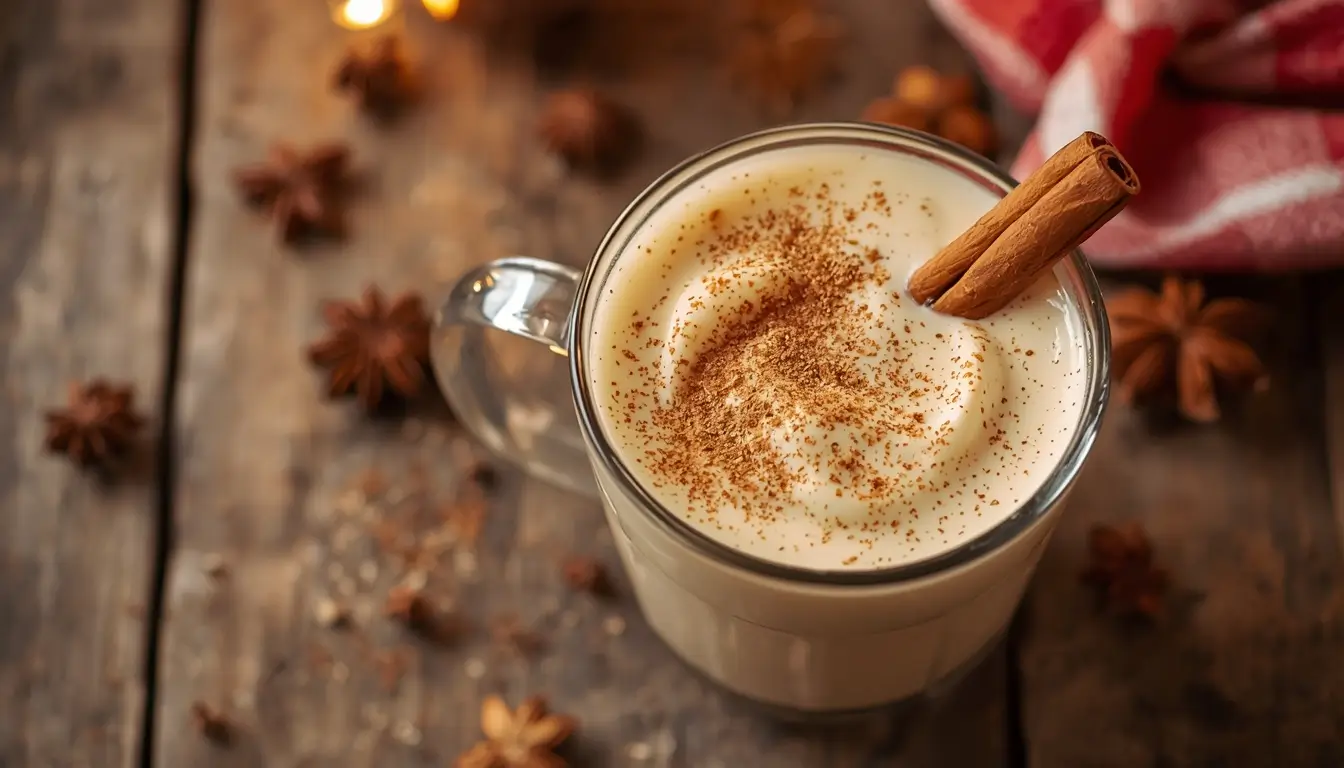
Did you know that a single cup of traditional eggnog can pack up to 223 calories and 34 grams of sugar, enough to kick you out of ketosis in one sip? If you love the creamy, spiced flavor of the holidays but follow a low-carb lifestyle, you’ve probably wondered: Is eggnog keto friendly? The good news is, it absolutely can be. This keto eggnog recipe gives you everything you love about the classic drink with none of the carb crash. Rich, velvety, and perfectly spiced, this low carb eggnog is about to become your new holiday tradition. Let’s dive in.
Ingredients
Here’s everything you need to make the best keto eggnog recipe at home:
Main Ingredients:
- 4 large egg yolks (pasture-raised for richer flavor)
- 2 cups heavy whipping cream (full-fat, not substitutes)
- 1 cup unsweetened almond milk (or full-fat coconut milk for dairy-free)
- 3 tablespoons powdered erythritol or monk fruit sweetener
- 1 teaspoon pure vanilla extract
- ½ teaspoon ground nutmeg (freshly grated is best)
- ¼ teaspoon ground cinnamon
- Pinch of sea salt
- Optional: 2–3 oz bourbon or dark rum for adults
Substitution Tips:
- Swap almond milk for full-fat coconut milk to make it dairy-free
- Use allulose instead of erythritol for a smoother, less cooling aftertaste
- Prefer canned coconut cream over almond milk for an extra indulgent version
Timing
- Prep time: 10 minutes
- Cook time: 10 minutes
- Chill time: 30 minutes
- Total time: 50 minutes
That’s roughly 30% less time than the average homemade eggnog recipe, which typically takes around 70–80 minutes, including cooling. With just a bit of patience during the chill phase, you’ll have a stunning eggnog keto drink ready to serve.
Step-by-Step Instructions
Step 1: Whisk the Egg Yolks and Sweetener
In a medium mixing bowl, whisk your 4 egg yolks together with the powdered erythritol until the mixture turns pale yellow and slightly thick. This usually takes about 2–3 minutes by hand or 1 minute with a hand mixer. Don’t rush this step. Properly whisked yolks are the secret to that signature silky texture in your keto eggnog.
Pro tip: Use room-temperature eggs. Cold yolks don’t emulsify as smoothly and can cause curdling in the next step. According to the American Egg Board, tempering eggs properly before heating is the key to food-safe, lump-free custard-based drinks.

Step 2: Heat and Temper the Cream Mixture
In a medium saucepan over medium-low heat, combine the heavy cream and almond milk. Warm the mixture until it just begins to steam; don’t boil. Once steaming, slowly ladle small amounts of the hot cream into your egg yolk mixture while whisking constantly. This process, called tempering, prevents the eggs from scrambling. Once you’ve added about half the cream, pour the egg mixture back into the saucepan.
Continue cooking over low heat, stirring constantly, for about 5–7 minutes until the mixture thickens enough to coat the back of a spoon.
Pro tip: Keep the heat low and steady. High heat is the number one enemy of smooth low-carb eggnog.
Step 3: Season, Chill, and Serve
Remove the saucepan from the heat. Stir in the vanilla extract, nutmeg, cinnamon, and sea salt. If you’re adding spirits, mix them in now. Pour the finished keto eggnog through a fine-mesh strainer into a glass jar or pitcher to remove any accidental lumps. Cover and refrigerate for at least 30 minutes before serving.
Pro tip: The flavor deepens significantly overnight. Make it the day before for the best possible taste.
Nutritional Information
Here’s the approximate nutritional breakdown per 1-cup serving (without alcohol), based on standard ingredients:
| Nutrient | Per Serving |
|---|---|
| Calories | 290 |
| Total Fat | 28g |
| Net Carbs | 2.5g |
| Total Carbs | 3g |
| Protein | 5g |
| Sugar | 1g |
| Fiber | 0.5g |
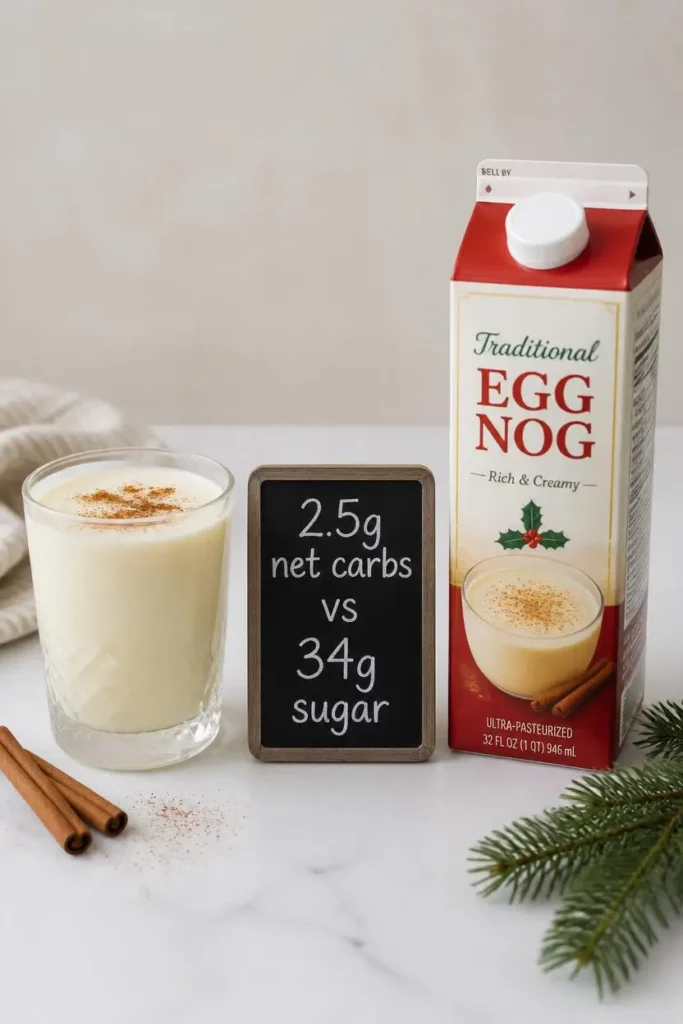
Compared to traditional eggnog, which has 34g of sugar per cup, this keto eggnog recipe delivers over 90% less sugar while maintaining the same rich, indulgent mouthfeel. The USDA FoodData Central database confirms that a standard 1-cup serving of commercially prepared eggnog contains approximately 20–34g of total sugars, a stark contrast to the 1g found in this low carb eggnog. That’s a win worth celebrating.
Healthier Alternatives for the Recipe
You can easily customize this eggnog keto recipe to suit different dietary needs:
For dairy-free: Replace heavy cream with full-fat coconut cream and skip the almond milk entirely. The result is slightly tropical but just as creamy.
For egg-free: Use 2 tablespoons of chia seeds blended with the coconut milk to create a thick base. It won’t be traditional, but it works surprisingly well.
For extra protein: Add one scoop of unflavored or vanilla collagen peptides or whey protein isolate. This bumps protein per serving to around 15g without affecting carbs. If you enjoy protein-forward keto drinks, you might also love this keto chocolate protein shake, a rich, filling option for any time of day.
For a lighter version: Use half the amount of heavy cream and replace it with extra almond milk. Net carbs stay low, but the texture will be thinner.
For caffeine lovers: Add a shot of espresso for a keto eggnog latte variation or try this creamy keto matcha smoothie for another energizing low-carb drink that’s perfect any time of year.

Serving Suggestions
This low carb eggnog shines on its own, but here are some creative ways to serve it:
- Classic chilled: Pour over ice in a rocks glass and dust with fresh nutmeg
- Warm mug version: Gently reheat on the stovetop for a cozy cold-weather drink
- Holiday cocktail: Add 1.5 oz of bourbon, spiced rum, or brandy per glass
- Keto eggnog latte: Blend with a shot of espresso and a splash of cinnamon
- Dessert pairing: Serve alongside your favorite keto sweet treats. Check out these keto dessert recipes for ideas that pair beautifully with this drink
- Frozen treat: Pour into popsicle molds and freeze for keto eggnog ice cream bars
For a festive touch, rim your glasses with a mix of erythritol and cinnamon before pouring.
Common Mistakes to Avoid
Even simple recipes have pitfalls. Watch out for these:
Overheating the custard. This is the most common mistake. High heat causes the eggs to scramble into chunky bits. Always keep your burner on low to medium-low and stir constantly.
Skipping the tempering step. Pouring hot cream directly into cold egg yolks will cook them on contact. Always add the hot liquid slowly and gradually.
Using cold eggs. Cold egg yolks don’t blend as smoothly. Let them sit at room temperature for 15 minutes before you start.
Not straining the final mixture. Even a perfectly made batch benefits from straining. It guarantees a flawlessly smooth eggnog keto drink every time.
Sweetening after chilling. Chilled drinks taste less sweet. Taste before refrigerating and adjust the sweetener then, not after.
Using a granular sweetener instead of powdered. Granular erythritol doesn’t fully dissolve and leaves a gritty texture. Always use the powdered version for this keto eggnog recipe.
Storing Tips for the Recipe
Refrigerator: Store your keto eggnog in a sealed glass jar or airtight container in the fridge for up to 4 days. Give it a good shake or stir before each serving, as the mixture naturally separates.
Freezer: Pour into freezer-safe containers and freeze for up to 1 month. Thaw overnight in the refrigerator, then whisk vigorously to restore the creamy consistency.
Make ahead tip: This recipe actually improves with time. The spices meld and deepen beautifully after 24 hours in the fridge, making it an ideal make-ahead holiday drink.
Avoid adding spirits before storing. If making a spiked version, add the alcohol per glass at serving time. It extends shelf life and lets non-drinkers enjoy it too.
Glass jars over plastic. Glass containers preserve flavor better and don’t absorb any lingering odors from the fridge.
Conclusion
This keto eggnog recipe proves that staying low-carb doesn’t mean missing out on holiday classics. With just 3 easy steps, you get a creamy, spiced, and satisfying drink with under 3 grams of net carbs per serving. It’s quick to make, easy to customize, and genuinely delicious.
Give this recipe a try this holiday season and let us know how it turned out! Leave a comment, we’d love to hear your twist on it. We’ve got a lot more delicious ideas coming your way.
FAQs
Is eggnog keto friendly?
Traditional store-bought eggnog is not keto friendly due to its high sugar content, often 20–34g of sugar per cup. However, a homemade keto eggnog made with heavy cream, egg yolks, and a keto-approved sweetener like erythritol keeps net carbs under 3g per serving, making it perfectly suitable for a ketogenic diet.
Can I use a different sweetener in this keto eggnog recipe?
Absolutely. Monk fruit sweetener, allulose, and Swerve are all excellent alternatives to erythritol. Just make sure to use the powdered form of any sweetener to avoid a gritty texture. Avoid honey, maple syrup, or regular sugar as these will spike carbs significantly.
Can I make eggnog keto without eggs?
Yes, though it changes the character of the drink. A coconut cream base thickened with chia seeds or a small amount of xanthan gum can mimic the texture. The flavor will differ, but it works well for those with egg allergies.
How many carbs are in low carb eggnog?
This specific low carb eggnog recipe contains approximately 2.5g of net carbs per 1-cup serving, compared to 34g in a typical store-bought version. The carbs come primarily from the small amount in the almond milk and spices.
Can I make a dairy-free version of this keto eggnog?
Yes. Substitute heavy cream with full-fat canned coconut cream and use unsweetened almond or cashew milk. The result remains rich and satisfying, while keeping the recipe keto-friendly.
How long does homemade keto eggnog last?
When stored properly in a sealed container in the refrigerator, this keto eggnog recipe can last for up to four days. For longer storage, you can freeze it for up to one month and thaw it overnight before serving.
Keto Eggnog
Course: DessertsCuisine: American4
servings10
minutes10
minutes50
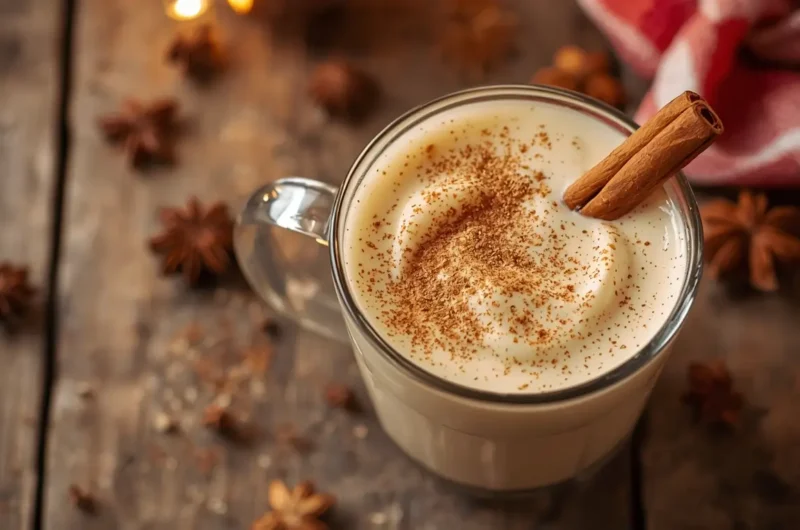
minutesA creamy, rich, and festive keto eggnog recipe with under 3g net carbs per serving. Made in just 3 easy steps in 50 minutes.
Ingredients
4 large egg yolks
2 cups heavy whipping cream
1 cup unsweetened almond milk
3 tablespoons powdered erythritol
1 teaspoon pure vanilla extract
1/2 teaspoon ground nutmeg
1/4 teaspoon ground cinnamon
Pinch of sea salt
Directions
- Whisk the Egg Yolks and Sweetener:
Whisk egg yolks with powdered erythritol until pale yellow and slightly thick, about 2-3 minutes. - Heat and Temper the Cream Mixture:
Warm heavy cream and almond milk over medium-low heat until steaming, then slowly temper into the egg yolk mixture and cook until thickened. - Season, Chill, and Serve:
Stir in vanilla, nutmeg, cinnamon, and salt. Strain, refrigerate for 30 minutes, and serve chilled.
Nutrition Facts
1 servings per container
- Amount Per ServingCalories290
- % Daily Value *
- Total Fat
28g
36%
- Total Carbohydrate
3g
2%
- Dietary Fiber 0.5g 2%
- Total Sugars 1g
- Protein 5g 10%
* The % Daily Value tells you how much a nutrient in a serving of food contributes to a daily diet. 2,000 calories a day is used for general nutrition advice.